


Editorial Note
This polyvocal essay originated from a single afternoon in a boardroom at the University College of the North, which is situated on Treaty 5 territory. Seven students gathered around a table to discuss topics such as caribou and corned beef, grandmothers and grief, moose meat and medicine. What you are about to read is our attempt to honour that afternoon in print.
The decision to present this piece in a polyvocal format was intentional and, we believe, necessary. Conventional academic writing would require these students to translate their knowledge into a framework that is not inherently theirs, citing their grandmothers’ teachings or footnoting what they already possess. Instead, we chose a format rooted in Indigenous oral tradition, which recognizes storytelling as a legitimate and rigorous mode of knowledge production. The voices presented here are lightly edited for clarity but remain structurally intact.
The repetitions, pauses, and moments when one student’s words open the door for another are not flaws to be eliminated; they are integral to the form itself
The course at the heart of this discussion, ANS2900: Indigenous Knowledge and Food Sustainability, was designed with this teaching philosophy from the very beginning. Students were not simply studying food sovereignty from a distance; they harvested potatoes, worked with bees, brought traditional foods to share, and invited their families into the classroom. The roundtable discussion was the culmination of this process – a space where lived experiences were recognized not as mere anecdotes to illustrate theory, but as theory itself What the students contributed that November afternoon represents an original intellectual and cultural offering, and we have made efforts to present it accordingly.
It is crucial to clarify what this means for publication. The students featured in this essay are co-contributors, not subjects. Their stories belong to them. Participation in the roundtable was separate from their academic standing in the course, and the decision to be published was entirely theirs. Emily Bushby, who transcribed the discussion with great care and sensitivity, is also acknowledged as a contributor to this work.
This piece appears in the Land-Based Teaching and Learning special edition of Muses from the North because it exemplifies what land-based pedagogy can look like when practiced with genuine fidelity to its principles: reciprocity, relationality, and respect. The classroom became a gathering place. The curriculum evolved into a conversation spanning generations. And the students – Nikki, Skylar, River, Maryn, Kayleigh, Stacy, Jasmine, and Lynn – became the teachers.
We express our gratitude to the faculty guests who attended and listened, to the Elders and community members whose presence shaped the course throughout the term, and to the land and knowledge systems that made this gathering possible.
Dr. Asfia Kamal
Instructor, ANS2900: Indigenous Knowledge and Food Sustainability University College of the North
Dr. Ying Kong
Editor, Muses from the North University College of the North
Editor: On November 17th, 2025, five faculty members participated in a roundtable discussion on Indigenous food sovereignty alongside students from the course. The faculty guests included Dr.
Jennie Wastesicoot, chair of the Aboriginal and Northern Studies, who teaches Aboriginal Health and Medicine; Dr. Kevin Spice, who teaches Aboriginal law, Indigenous law, and restorative justice; Kirk Fisher, a Science instructor; Dr. Greg Stott, a history professor; and Dr. Ying Kong, chair of the English department, who teaches Indigenous literature and is the editor of this special issue of Muses from the North.
We gather in the boardroom at University College of the North, Treaty 5 territory. Sitting around the table are faculty guests and students in the course of Indigenous Knowledge and Food Sustainability (ANS2900). Dr. Asfia Kamel is leading a roundtable discussion on food sovereignty. They are all ready to listen.
The gathering took place in the boardroom on the Thompson campus, where we sat around the table to listen to students’ stories and experiences relating to cultural and nutritional dimensions. These discussions addressed the right to culturally appropriate foods, traditional diets, food as part of cultural identity, and nutrition security beyond mere caloric availability.
PART 1: PROLOGUE-Gathering Around Food
Dr. Asfia Kamal: The course has a dedicated group of participants focused on Indigenous rights and food sovereignty, consisting of Nikki Clace, Skye Veuillot, River Johnson, Stacey Moose, Jasmine Dumas, Maryn Coulson, Lynn Smith, and Kayleigh O’handley. Two of these students are completing practicums as part of their education. Emily Bushby, a former student of this course, transcribed the roundtable discussion for this polyvocal essay.
This gathering emphasizes the themes of listening, respect, and reciprocity-principles that have guided our class from the very beginning. I would like to acknowledge that we are gathering on Treaty 5 territory, which is the ancestral land oflndigenous communities in the North. Their knowledge and relationship with the land are crucial to guiding our learning.
This event marks the culmination of ANS2900: Indigenous Knowledge and Food Sustainability, a course designed with a unique pedagogical approach to explore these themes. Throughout the term, students have shared traditional foods, recipes passed down from grandmothers, and personal experiences of reconnecting with foods they had lost touch with or discovering new ones they had never tasted.
What follows are the voices of six Indigenous students, presented in their own words from our roundtable discussion. I have made light edits for clarity while preserving the rhythm, emotion, and authenticity of their storytelling. You will hear about caribou on kitchen tables, corned beef and trauma, residential schools and spaghetti, moose meat as medicine, grandmothers who never let anything go to waste, and elders in care homes who miss rabbit stew.
PART 2: Food as Memory, Food as Medicine: Voices from the Students
Dr. Asfia Kamal: Today’s session will be structured to give each student the opportunity to share their viewpoint. Prior to this meeting, I provided students with guiding questions to allow them time to reflect, take notes, and brainstorm at home. Please view this not as a formal presentation but as an open conversation with your classmates. This is your chance to share your story. Each of you will have 5-7 minutes to speak, after which we will open the floor for questions and conversation.
Nikki Clace: I am a second-year Bachelor of Arts student. I registered for this course to learn more about food sustainability, which is important to me. Coming from a remote community, it is a part of my daily life. I was also really interested in the classes offered.
I’ll start by discussing one of our guiding questions related to food and identity. Food and our sense of self are deeply interconnected. When you think back to your earliest days of socialization, you likely remember the foods you ate and your favourite dishes. When you’re not feeling well, you often turn to food for comfort, seeking nutrients to restore what your body has lost. Furthermore, your food experiences connect to who you are. For example, if you live in a northern area, you might prefer preserved or dried meat. In contrast, if you grew up in a southern region, you might have enjoyed more fresh produce from agriculture or farming. These are the experiences we are exposed to in our formative years.
In my argument, I would like to acknowledge the significant role that women-particularly Indigenous women-play in early socialization and in our experiences with food security. When I think back to my childhood, I vividly remember caribou in my grandmother’s kitchen. I recall coming home to the sight of caribou being butchered on the kitchen table while I did my homework on the floor. There would be a pot of soup simmering late into the night, staying warm until my grandmother went to bed. In the morning, leftovers would often be set aside for our dogs. Nothing went to waste; nothing went in the garbage. This lesson about resourcefulness is crucial as it shapes our identities and how we share our experiences with the wider world.
If someone has not experienced food security, they may resort to illegal means to obtain food. The food program’s review mentions several potential solutions, and one that stood out to me is the one in our textbook (p. 286) regarding school food programs. These programs help deliver daily breakfasts and lunches so students can focus on their learning.
Another aspect of food sovereignty involves having access to preferred foods. For children in our area, this might mean going out to harvest beluga or pick berries in the summer. Eating seasonally, as our ancestors did, is an important practice we should embrace. If we leaned into this idea more, perhaps we wouldn’t have to rely on supplements and superfood drinks to obtain our nutrients.
Personally, I have struggled with chronically low iron levels and have tried various iron supplements, including transfusions. However, what really made a difference was when my sister brought me a generous piece of moose meat. I’ve been slowly preparing and eating it throughout the week, and it has really helped me feel better-much better than when I was sluggish from low iron.
When comparing the nutrition of beef to moose meat, I’ve found that three ounces of moose meat provides 226% of the daily recommended intake of iron. That’s not a huge amount; it’s roughly the size of a single pan of moose meat with onions. Food is not just an essential building block of our lives; it is also a key part of our identity.
Dr. Asfia Kamal: Thank you, Nikki. When you speak in class, you bring a lot of emotion to your stories. I appreciate all the engaging stories, exciting recipes, and conversations you’ve shared throughout the term. An important aspect of your contributions is how you express food as part of people’s identity. As an Indigenous person, you view the world differently, seeing everything-as both living and non-living-as interconnected. This perspective highlights the importance of relationality. Thank you for providing another example that enriches our discussions on this topic.
Skylar Veuillot: I am in the final year of my education program. I took this course to connect with my culture. I have been here for five years now, and this year I have connected more with my language and food due to this class and another course I am taking. The experience was great; I had never tried raw honey before, and it really is delicious.
I will be discussing community and responsibility, focusing on what individual communities do to protect food knowledge. I am from Lac Brochet, Manitoba, where I grew up in an overcrowded house with, I believe, eight siblings. My family was on the borderline of poverty, but my parents managed to overcome those challenges. My dad was a hunter and trapper, spending a lot of time on the land.
As a woman, I faced limitations in what I could do on the land because we were not allowed to go hunting or touch a drum. However, times have changed, and now I see many youths, especially women, hunting alongside the hunters in Lac Brochet.
In school, we would participate in cultural camps where we spent three to four days out on the land, learning skills such as filleting fish and cutting up caribou. Currently, I am re-learning how to fillet fish. I have noticed that in Brochet, there is a growing focus on land-based education for youth and adults. For those aged 15-18, there are trips to other communities and annual canoe trips. Hunting sually begins in December. I feel that my community is making significant progress in bringing our knowledge back because I don’t know much about the land. While I am familiar with caribou, I know it would be a challenge for me to navigate out there alone.
As a child, I remember my late granny convincing me to try something that turned out to be caribou brain, and they told me it was ice cream. I did not like the texture then, and I still don’t to this day, though I do enjoy caribou tongue.
River Johnson: I am a second-year student in the Bachelor of Arts program, focusing on Aboriginal and Northern Studies with a pre-law intent. I am a big fan of Dr. Kamal’s courses, so I take everything she offers, and I truly enjoy this course.
To start, I want to express how deeply moved I am by what I have learned. Before taking this course, I didn’t realize how emotional food can be, and I now find myself incredibly passionate about it. I will discuss the inner transformation I experienced during this course, focusing on the themes of reflection and action. I have reflected on the question: “What was one moment or reading in the course that changed how I think about food?” I have come to recognize that it wasn’t a single moment, but rather a series of moments.
One key realization I have made throughout this course is that food is not merely an end product; it is a process. More profoundly, it represents a way of being interconnected with thousands of elements beyond space and time. Among these moments, the concepts of relationality and reciprocity stand out, as does the respect required in food production.
My own relationship with food has been complicated. I was raised by a single mother as the oldest of five children, and we relied on food stamps while living in the city. My parents’ divorce marked the end of my connection to my Metis heritage-my father’s family, known for their hunting and trapping. This loss meant that the traditions and knowledge related to food were not passed down to me.
Additionally, I once harboured a fear of food, both of consuming it and of not having enough. I felt disconnected and resentful towards food, particularly because I constantly had to work hard just to afford it. Coming into this course, I had a damaged relationship with food, filled with resentment. However, this course began to heal that relationship within me. As I engaged more with the subject, I began to appreciate the immense effort and knowledge required to bring food into our lives.
A significant shift in my perspective occurred during our study of honey production. This experience taught me valuable lessons about life that extend beyond the physical aspect of producing honey. One crucial takeaway was the idea of interconnection, which transcends both physical space and time.
While working with the bees, I began to think about my European ancestors; my family was involved in beekeeping about 100 years ago. I have always struggled to connect with my European heritage in the same way I do with my Indigenous roots, so this experience was particularly meaningful for me. It felt like a positive connection, free from the colonial harm that often complicates such relationships.
Another important lesson I learned was about preparation-not just in a physical sense, but also internally. When we arrived to meet the bees, I felt overwhelmed by the chaos and worried about getting stung. I learned that if I grounded myself and approached the bees with respect, I would be okay. This realization helped me overcome my fears and build a better relationship with food and the processes behind it.
For me, preparation begins with understanding myself before I dive into food production, as this impacts everything else I do. The process might have appeared chaotic, but in reality, it was calm and interconnected. All the bees seemed to know their roles and the tasks at hand. Steven Laroque mentioned that the bees were working against a tight timeline as fall approached, which explained their rapid movements. It was remarkable to observe their efficiency.
One valuable lesson I learned, or perhaps reaffirmed, was the importance of community. Every bee had a specific role, and they were all focused on a common goal, truly a perfect example of nature’s community. I also realized the significance of respect and humility. When approaching the bees, it’s essential to consider the environment, the season, and the weather. Steven Laroque explained that the best time to approach a hive is when it’s sunny, contrasting it with the discomfort of being woken in the cold. This insight made me reflect on various factors to consider in the production process.
As a strong feminist, I felt fortunate to be in class with so many incredible people, especially amazing women who united and encouraged us throughout the physical activities. I noticed that none of them took breaks, while I needed several. This experience also echoed in the process of honey production. All the honeybees involved were female, showcasing a truly feminist society.
Lastly, I pondered the concept of death in relation to food regeneration. Although we didn’t discuss it in class, I have experience in death work and understand that death is a natural part of the food cycle. It is not something to be avoided; rather, it is an essential aspect of continual regeneration. Unlike our human perceptions of death, this process is simply part of a larger ecosystem.
I felt immense pride in developing these new skills. This knowledge serves as another tool for resisting colonialism; now I can plant my own vegetables and know what they contain, freeing me from reliance on the market. I am also grateful for the relationships I built throughout this class and hope this is just the beginning of our journey together.
Dr. Asfia Kamal: Thank you, River. I am always amazed by my students’ presentations. When I am in the classroom with them, I often wonder if they are really listening to me. However, after hearing their stories, I realize they are paying attention. Your presentation added a lot of personal depth.
Maryn Coulson: I am a first-year Bachelor of Arts student. I approach education from a different perspective than many others. I took some time to figure out my life first, and now I am here to learn, rather than simply following the traditional path of graduating high school, going to university, and checking off boxes. In my experience, when I tried to learn things before I felt ready, I struggled to grasp the material.
I am pursuing a Bachelor of Arts degree at UCN, and I find it genuinely interesting, especially since I’m taking classes like Food Sustainability. I never anticipated being in a class like this, and I am excited to share what I have learned with all of you.
I will be brave and give it a go-tough act to follow, River! To start, I had initially written notes that I intended to follow, but I’ve decided to wing it instead because I want to delve deeper into the topics, I am passionate about.
This class has completely changed my way of thinking. The themes Asfia introduced to us inspired me to blend two of them: Indigenous knowledge and land, and how I plan to take action moving forward. I believe these topics are interconnected, which is why I chose to combine them.
As a Metis student, I wasn’t raised in traditional Metis cultural ways. I used to think I was disconnected from my Indigenous ancestry; for instance, my family doesn’t go hunting, and we fish only occasionally as a leisure activity since we have a boat. I have dabbled in Northern living, including hunting and fishing, and I learned to garden from my grandmother. However, none of these teachings come from my life down south, which highlights one of the problems with education in Manitoba.
The disconnection between southern and northern perspectives is significant. Until you visit the North, you can’t truly understand this disparity. This realization was a major shift for me educationally. This course was very interesting to me. How I got into it was that Asfia sent an email to the introductory Indigenous studies students, asking us to sign up for this course. I was immediately interested. I work full-time in parole with corrections, and I want to eventually get into an Indigenous liaison officer position so I can help heal the hurt people who are in the Indigenous pathways of healing through corrections. I strongly believe this is a huge thing. I am very into how this is connected, how I feel connected to the earth and the world around me now. I struggle to find the words for this experience, because I myself am not too sure what has happened to me.
Four months ago, I was a very different person than I am now, and I believe this class played a significant role in helping me connect with my true self, rather than just floating through life and figuring things out on the fly. I had never felt like I was able to ground myself and establish my footing.
I want to acknowledge what River said about having to work endlessly just to afford food, and the negative implications that have on our relationship with food. Until he made that statement, I hadn’t realized why I became so frustrated each week when making my meal plan.
One important concept I learned in this class is relationality. I came to understand how crucial it is to live in a way that respects more than just human beings. For example, I learned that trees, rivers, and water are alive. Everything around us deserves respect for sustainability.
I have struggled to articulate my thoughts on this, but Chief Shirley Ducharme shared how hydro dams affect fish populations. While I understood that hydro dams affected reserves and water supply, I never considered how these factors relate to food sources and community well-being. My only concern was the lack of water for growth, without realizing that the absence of water meant no fish could thrive as well. I had never made that connection until it was explained to me.
In our area, there is a fish ladder at the dams that allows fish to reach their spawning grounds, but I learned it isn’t effective. I never connected the effects of a dam near the airport to South Indian Lake before, as I thought, how could something here impact somewhere so far away? This illustrates how Indigenous knowledge shows that everything is interconnected, regardless of distance.
When I contemplate these complexities, it’s hard to believe the world operates this way. I also appreciated Elder Carol Snoffsky’s presence at the Fall Festival. I had some prior knowledge of Indigenous medicines and teachings, but most of what I learned came from the southern regions. Having only lived in Thompson for three years, I thought I understood medicine picking. For instance, I knew how to pick sage, but I was shocked to discover that sage doesn’t grow here.
Now, I find myself questioning how Indigenous practices from different regions connect. For example, I learned that when picking sage, it’s important to collect the seeds and sprinkle them back onto the land. You take the medicine, but you must also give it back to ensure it continues to thrive. You cannot simply upload everything and expect it to return next year.
Reflecting on my past, I realize how wasteful I used to be with food. It’s unfortunate to admit, but I often prepared grocery lists based solely on what I wanted to eat without considering what I already had at home. As a result, I would end up throwing away expired items and buying more food to replenish my fridge without being mindful. I didn’t respect the food I had.
Now, I’ve changed my ways. For example, when I cut vegetables, I save the scraps in my freezer. My child is now one year old and is entering a stage where he wants to do things with me, so we are investing in a toddler tower. This will enable him to be with me while I cook and learn these valuable lessons from an early age, rather than waiting until his twenties to figure it out.
I also appreciated Chief Shirley Ducharme’s insight into root cellars. I’m now making a conscious effort to ask my grandmother questions about her cooking and the stories behind her methods, questions I would not typically ask. This entire course has truly changed my life.
Dr. Asfia Kamal: Thank you so much, Maryan. I want to take a moment to express my gratitude for bringing your adorable little baby to the activities. I genuinely enjoy it when students include their little ones in our hands-on experiences. They bring so much energy, happiness, and joy, making the experience even more rewarding. I appreciate that. I also heard both of you share various perspectives on reframing your relationship with food.
Kayleigh O’Handley: I am in the Bachelor of Science in Nursing and currently taking Dr. Kamal’s class. I chose to focus on food and identity. For me, reflecting on food and identity brings me back to my upbringing in Northern Manitoba. Food was never just something to grab from the store; it was something we actively went out to gather. We hunted, fished, foraged, and grew our food, which felt entirely normal to us.
When I hear the term “food sovereignty,” it doesn’t feel like an academic concept; it simply means having access to the foods our families have relied on for generations. It’s about the freedom to hunt, fish, gather berries, and use traditional medicines without barriers or the need to ask for permission. Food sovereignty involves understanding where your food comes from and nurturing a connection with the land. Much of my identity stems from these experiences.
Growing up, I spent many summers at bush camps, hunting, fishing, and picking berries with my family, while also watching my grandparents’ garden. They were passionate about gardening; every year, they planted vegetables and ensured fresh salads were on the table for dinner. Witnessing this taught me that food requires time and care. You don’t just run to the store for produce; you work hard, and in return, the land rewards you.
When I think of home, I picture being out at camp enjoying fresh pickerel, moose meat, wild blueberries, homemade soup, and Bannock. These foods connect me to my family and evoke memories of moments like our family fish fries. The food we eat carries memories and is integral to our identity. Traditional food contributes to our well-being; it’s healthier and instills a sense of grounding and pride, especially in the North, where store-bought food can be extremely expensive and not always of the best quality. Harvesting your own food fosters pride and independence. In the past, we relied solely on our skills, family, and the land.
My family also used natural medicine before turning to Western medicine, often starting with plant-based remedies like tea. This approach has always been part of our lives, reiterating the connections among our identity, health, and the natural world. Taking this course has deepened my appreciation for these concepts. It highlighted the strong ties between food, land, identity, and community, particularly for Indigenous peoples. It reminded me that the way my family approaches food is crucial to cultural survival, not merely a reflection of how we grew up.
I believe classes like this are essential because not everyone has access to traditional foods, land-based knowledge, or elders to guide them. Some individuals may not encounter these opportunities until a course like this sheds light on them. Learning about food systems from an Indigenous perspective facilitates conversations and fosters an understanding that food is more than just calories and nutrients; it encompasses relationships, responsibility, and identity.
Overall, this course has helped me view my own experiences differently. Food isn’t just something you consume; it’s part of who you are, where you come from, and how you honour your community and the land that sustains you.
Dr. Asfia Kamal: Would you like to share with us what your mom thought about this course, or did she say anything after harvesting with you?
Kayleigh O’Handley: She loved it. I remember telling my family about the class. One weekend, I brought my sister, and she loved it too.
Dr. Asfia Kamal: Thank you for bringing your family again! I appreciate it when you all include family members in the class, as it greatly enhances our activities.
Stacy Moose: This is my second year in the Bachelor of Arts program. To me, food sovereignty means having the power to choose our food and how it is produced. It involves eating food sourced from our land and local communities instead of relying on large corporations. Essentially, it is about the right to decide how we grow and share food.
I come from a small community with only one store, and the prices are very high and the options are limited. I know that my community values sharing food; for example, harvesters readily share their produce with others. This practice strengthens our traditions. Knowing how food is harvested and that it is free from contaminants reduces the risk of disease.
Access to food is closely connected to identity and well-being. Having our traditional foods is important because these are the foods our ancestors relied on for survival. Consuming these foods deepens our connection to our culture and to each other, and they are often healthier alternatives to store-bought products.
Every year, my brother-in-law goes hunting during the goose hunting season in the spring. He spends a few days at camp with the goal of catching as many geese as possible. When he returns, the geese are distributed to the mothers in our community so they can prepare a feast for their families. It is heartwarming to see everyone express gratitude for the geese, and any leftovers are donated to the school. The school even runs a summer camp that teaches students about traditional foods.
Dr. Asfia Kamal: Thank you, Stacey, for sharing such amazing insights about food sovereignty. The stories from local communities are truly remarkable. I appreciate how many of you mentioned the idea that food is medicine-I’ve heard this perspective from nearly everyone.
PART 3: INTERLUDES
Dr. Asfia Kamal: As we listen to these stories, we begin to see how women carry knowledge in their kitchens and in their hands. This aligns with what Indigenous scholars have long highlighted about women’s roles in food systems. However, hearing these specific details-such as caribou on the table, homework spread across the floor, and soup that never stops simmering-provides us with a deeper understanding than any textbook could offer. We now have a few minutes if anyone would like to share comments or provide feedback for the students.
Maryn Coulson: I would like to know how a brain, which resembles ground beef, can also resemble something like ice cream. Do you cook it or grind it up?
Skye Veuillot: It’s very creamy and white. From memory, I recall that they take a whole caribou head and bake it over a fire or in the oven. The entire head cooks, and then they eat the cooked brain.
Maryn Coullson: Ah, okay, that makes sense. I was just picturing brains being served to you on a tray like ice cream. Thank you for clarifying that for me!
Dr. Greg Stott: I am truly impressed and moved by these stories. Hearing these families’ stories about food moves me deeply; they are powerful.
Nikki Clace: I would like to share a comment. River spoke briefly about relationships and building connections in class. I believe that caring for the land is an extension of caring for ourselves. When we had the chance to work together manually, such as harvesting potatoes and carrots, it felt very communal, making it easy to connect with others. I moved here almost two years ago, but I haven’t really connected with many aspects ofUCN; there haven’t been many opportunities to do so. It was especially meaningful to me knowing that we were giving back the same produce to community members during the Fall Fest.
Dr. Asfia Kamal: Thank you for your important comment. I want to share an experience from 2023 when a student from Nigeria sought my advice on settling down in Thompson. He had moved to Canada just four months prior with his young baby. He was very attentive in class, so at the end of the term, I asked him how he felt about the school. He was shocked that no one spoke during class and that everyone was just staring at their screens. He was craving friendships and connections, so I invited him to join my class for the next term.
We incorporated hands-on activities with Elders, and he ended up forming a close friendship with a student from Norway House. It was rewarding to witness their mutual learning and connection. I believe that the food sovereignty course served as a medium for that bond. From this class, all I have heard is laughter.
River Johnson: During the Fall Fest, while Jasmine was making Bannock, she had to leave her station for a moment. Without her having to say anything, Nikki got up and started helping out. It was impressive to see the task being completed without any verbal communication. It was as if everyone understood that something needed to be done, and they jumped in to assist.
Dr. Asfia Kamal: I recall a moment of panic when people were lining up for Bannock and soup, but we were unable to serve the soup. Our last two presenters are Jasmine and Lynn.
Jasmine Dumas: I am taking Asfia’s Food Sustainability course, which was recommended to me by Kirk Fisher, my science instructor. I also heard about it from my academic advisors. I thought it would be interesting to be a part of it, and I am really enjoying how the course is going.
In reflecting on a moment in the course that changed my perspective on food, I agree with River: it was not just one thing, but rather many elements that came together. What stood out to me the most was how this course brought us all together as a class. We were all strangers when we first joined, but now we can communicate easily, share jokes, and enjoy each other’s company. In our evening classes, we sit and laugh before lectures begin.
When people think about food, most focus on calories and nutritional value. However, this course has encouraged me to consider the types of food we consume. It made me reflect on the products we buy in stores and how many of them aren’t natural. This contrasts with the effort put into gardening and the rewards that come from it. For example, at Stevens Garden, there was an overwhelming number of potatoes, and even after harvesting, he still had plenty left.
It was truly an amazing experience, and I genuinely enjoyed connecting with everyone. I’ve met new people who I now consider friends. There are many regulations surrounding food; for instance, at Fall Fest, a large pot of moose stew was available only to class participants and volunteers at the Boreal Discovery Center. Thankfully, none of the soup went to waste-I took home an empty bowl.
I love sharing my food with everyone and taking pleasure in cooking and baking. I appreciate seeing others enjoy the meals I prepare. I always share what is in my food and my recipes. I enjoy watching others prepare food for their loved ones, too. Growing up, I learned a lot just by observing.
I also appreciated learning about the bees at Stevens Garden. If we don’t share this knowledge with others, it risks being lost. It’s essential to share what we’ve learned here with friends and family; this valuable information will fade away.
I have a deep respect for the land. We only take what we will consume, using every part of the animal. For instance, when we go hunting and obtain a moose, we do all the prep work where the moose lies. One important tradition is hanging the moose’s bell on a tree where it was shot, though I’m not sure about its significance. We leave the scraps for other animals like wolves and foxes, and we take the meat back to the community.
By the way, Stacey and I are from the same community, and she mentioned how important it is to share. It truly is vital. If we know a single-parent household needs help, we share our meat with them. No one should go hungry; if you have plenty and know a family is in need, it’s essential to give food willingly rather than hoarding it.
Sharing is important, and it’s heartening to see. When I go camping with other families, they often bring new families, welcoming everyone even if they’ve never camped before. The children who join learn the activities we do around the campfire. It all connects-sharing, relationships; it’s all very important to me.
I have a little one who just turned two, and it’s essential for him to see what I am learning and doing as well. Being able to cook wild food and watching him eat and enjoy it is truly delightful.
Lynn Smith: Tansi, my name is Lynn Smith. I am a Metis woman with roots reaching from the Red River Settlement. I am currently pursuing a Bachelor of Arts, majoring in Sociology.
My family line is tied to the historic fur trade and the founding of the North. After a long period of disconnection in my family. I am giving back by practicing food sovereignty, learning to harvest from the land, and ensuring our culture stays alive for the next generation.
Food has always felt disconnected for me. I am Metis, and my father is Metis, but we only discovered this about 15 years ago. Growing up, I felt very disconnected from my Indigenous heritage. I was raised in a colonized environment and did not learn much about Indigenous culture or teachings.
Over the past ten years, I have been trying to understand who I am, as I have always felt like I didn’t belong. I never quite felt white, and I often disliked that part of my identity.
For a long time, food represented that disconnect; I hated food, eating, and trying different cuisines. However, while taking this course and researching my identity, I began to connect with my Indigenous roots. I learned that everything is interconnected, including the land and our culture. This realization helped me understand that connecting with my culture is a form of personal healing and self-determination way to reclaim the knowledge and skills lost by my ancestors. Experiencing this connection within myself was deeply emotional.
I also learned that canning used to be a significant activity in my family. Talking to my dad, I discovered that my grandmother used to can food because they were poor. As a single grandmother, she would go out to gather food and medicine, and she taught her family how to preserve it. Sadly, this practice was lost over time. I am grateful that I can now reconnect with these skills, not just for myself, but also for my past and future generations. Thank you.
Dr. Asfia Kamal: I would now like to open the floor for any questions, concerns, feedback, comments, or compliments.
Dr. Jennie Wastesicoot: I would like to thank you all for sharing your stories. You took me back to my own upbringing. What caught my attention is how food can be emotional. It reminded me of a time when I spoke to an elder during my field research while pursuing my master’s degree. The elder reflected on her childhood, expressing how much she misses traditional country food and lamenting that people no longer gather to share it. I could see the sadness in her eyes as she talked about how she used to love eating rabbits, but no one brings them to her anymore, since most young people don’t hunt or trap anymore.
This made me think about our elders; instead of being kept in our communities to be cared for, many are sent to places like The Pas or Thompson and end up in personal care homes, losing a significant part of their diet in the process. I remember a time when I stopped eating fish. I chose to eliminate it from my diet for nearly a year and began to feel very lonely, as if something was missing from my life. I spoke to an elder, and she helped me realize I was missing fish. Since then, I no longer exclude any traditional foods from my diet, and I believe it’s important to bring them back into our lives.
I was about 12 years old when I first tried Western food, and that experience happened at a residential school. The food was completely foreign to me; I vividly remember being served spaghetti, with the sauce in one bowl and the noodles in another. I ate them separately until I later learned they were supposed to be mixed. That was my introduction to Western cuisine. Overall, it was a really good expenence.
Dr. Asfia Kamal: Thank you, Dr. Jennie Wastesicoot, for attending and bringing your students to join online for this session.
Dr. Kevin Spice: I have a question for River: if there were no humans or bears, what would be the purpose of honey? Is it there to insulate the hive, or does it serve another function?
River Johnson: I’m not an expert, but I feel that removing elements from the environment will have an impact. This is just a speculation, but I imagine that if humans and bears were removed, it might somehow affect honey production. I’m not sure how this would happen or if it is true; it’s just an intuition I have.
Dr. Asfia Kamal: That’s a great question. Do you have any other questions or comments?
Kirk Fisher: I have a comment and a question. Thank you very much for sharing; it was an amazing experience listening to these stories. I truly appreciate the opportunity to take this course, as I am a big fan. I have a question for Jasmine: why couldn’t people eat your soup? What were the regulations regarding it?
Jasmine Dumas: That is because it did not come from a regulated store. It’s hard for me to explain health and safety.
Nikki Clace: There are numerous food regulation acts that must be approved by the Canadian Food Inspection Agency (CFIA) for non-domesticated animals to meet regulatory standards. This means that a piece of meat might need to be flown to Winnipeg for inspection before being brought back north. By the time this process is completed, the meat has likely travelled more than I have in the past year. This creates a significant barrier for Indigenous people who wish to share their traditional foods across cultures.
Dr. Asfia Kamal: Under the Safe Food for Canadians Act, any wild food served to the public must be inspected by a certified health inspector [l]. However, we did not have a health inspector certified to inspect wild meat, nor were we able to determine if it was safe for public consumption.
Maryn Coulson: Is it because that dish was served at the Discovery Centre? If I invite people to my backyard, can I serve them whatever I want?
Dr. Asfia Kamal: Yes, it is acceptable to share food privately as long as you have a hunter’s license. This also applies to communities; when someone hunts and shares the meat within the community, it is permitted. However, if you want to sell wild game in a restaurant, that is not allowed in Manitoba.
Dr. Jennie Wastesicoot: That makes no sense to me because, if you reflect on what the Indian Act has done to oppress the people, this might be another aspect that needs to be decolonized.
Dr. Asfia Kamal: Certainly. Here’s a clearer version of the text: “Yes, of course. There are two main issues to address. First, racism: you want us to be safe, but you do not provide the necessary resources. Second, you are undermining Indigenous knowledge. Our elders have been hunting and fishing for generations, ensuring our safety and health through their traditional knowledge and food handling practices.”
Kirk Fisher: This is somewhat related, but I am curious. The act you mentioned regulates food preparation.
Dr. Asfia Kamal: It regulates many aspects of food handling within buildings and facilities. For instance, if we wanted to serve food in this room, an inspection would be required to ensure that an exhaust fan, proper washing stations, and other necessary equipment are in place. There are approximately 60 regulations to follow before food handling can be permitted. Additionally, individuals involved in food handling must possess the appropriate certification.
PART 4: EPILOGUE Learning from Our Students
Dr. Asfia Kamal: All the students have spoken now, and we can already identify recurring themes: grandmothers, kitchens, and the specific work of women’s hands-such as butchering, cooking, preserving, and teaching. The caribou served at the table that never went to waste, the recipes passed down from kokum (grandmother) to mother to daughter, and the soup that simmered all night are all part of this narrative.
Kim Anderson (Anderson, 2000) has highlighted how the food work of Indigenous women represents cultural leadership rather than mere domestic labour. However, by hearing these specific stories-such as doing homework on the floor while caribou was being butchered or learning to bake with recipes passed down across generations-we begin to understand this differently. We come to see the
kitchen as a classroom, the grandmother as a professor, and the daily acts of food preparation as a ceremony.
We also recognize the breaks in these knowledge pathways: residential schools where Western food was unfamiliar and confusing, poverty that led to corned beef instead of caribou, and young people who no longer participate in hunting. These are not just personal losses but collective ones, the erosion of knowledge systems that have sustained communities for thousands of years.
The students are teaching us that food sovereignty isn’t just an abstract policy. It resides in grandmothers’ kitchens, and it fades when elders are moved to care homes where no one brings rabbits anymore.
PART 5: METHODOLOGICAL NOTE
This roundtable discussion format honours oral tradition. In many Indigenous cultures, knowledge is transmitted through story rather than written analysis. By presenting student voices with minimal scholarly interruption, we recognize oral narrative as a valid form of knowledge production. Brief interludes between narratives offer space for reflection, but the stories themselves carry the meaning. This approach is also consistent with Indigenous research methodologies that value relationality, listening, reciprocity, and the co-creation of knowledge. Rather than extracting information from participants and translating it immediately into an academic argument, this format allows students to speak in their own rhythms, with their own emotional and cultural emphases intact. The roundtable structure reflects classroom practice within land-based and Indigenous pedagogies, where dialogue, witnessing, and shared presence are central to learning. In this sense, the text does not simply report on students’ reflections; it enacts a method of knowledge sharing grounded in respect for story, voice, and lived experience.
Endnotes
[1] In many parts of Canada, federal and provincial food safety regulations-such as the Safe Food for Canadians Regulations and provincial public health policies-limit the ability to serve or distribute wild game in institutional settings, including schools and universities. While these regulations are designed to address food safety concerns, the food safety and inspection facilities are unavailable for remote northern Manitoba communities. Scholars of Indigenous food sovereignty emphasize that these regulatory frameworks often fail to recognize Indigenous harvesting practices, land-based food systems, and cultural protocols of sharing (Morrison, 2011; Cote, 2016; Robin et al., 2020). In northern contexts where country foods remain vital for nutrition, cultural continuity, and intergenerational teaching, such restrictions create tensions between public health regulation and Indigenous rights to traditional food systems.
About the Contributors
Student Contributors
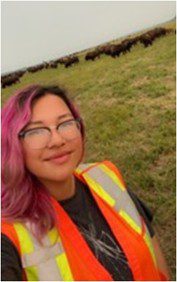
Skylar Veuillot is a final-year Education student at University College of the North. Originally from Lac Brochet, Manitoba, she grew up in a household shaped by the land – her father a hunter and trapper, her community committed to passing cultural knowledge to younger generations. Her contribution to this roundtable reflects five years of deepening connection to her language, her food traditions, and the changing landscape of land-based education for women and youth in her home community.
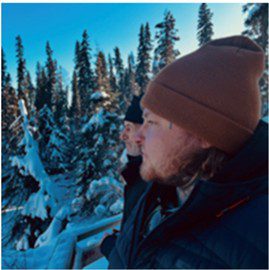
River Johnson is the son of a Red River Metis father and a mixed European mother. He is originally from Treaty 1 territory and has made his second home in Treaty 5. River is currently pursuing a Bachelor of Arts degree at UCN, where he studies Aboriginal and Northern Studies. He is passionate about systems thinking, relationship building, problem-solving, and ending all forms of violence. Most importantly, he has a deep love for cats.
In his contribution to this roundtable, River will share his journey of healing and reconnection through beekeeping, land-based learning, and the exploration of reciprocity as both a practice and a philosophy.
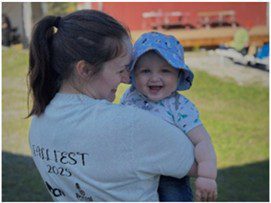
Maryn Coulson is a proud Red River Metis who is a dedicated mother, wife, student, and friend. Originally from Southern Manitoba, she has strong ties to the North, which prompted her family to relocate in 2022. Currently pursuing a Bachelor of Arts degree, Maryn views her education as a journey of personal growth beyond just academics. She is learning about connection, respect, and reciprocity, and understanding the wisdom the land offers to those who take the time to listen. Through her experiences, she is discovering the essence of community and what it means to find her true home.
Maryn lives by the motto: “To respect yourself is to respect the land, as all living, breathing things are connected through relationality.”
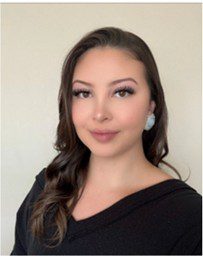
Kayleigh O’Handley is a Bachelor of Science in Nursing student at University College of the North. She grew up in Northern Manitoba in a family that hunted, fished, foraged, and gardened as a way of life – practices she describes not as cultural recovery but as simply how things were done. Her contribution to this roundtable articulates the connections among food, land, identity, and health from the perspective of someone who carries that knowledge and is learning to name its significance.
Stacey Moose is a second-year Bachelor of Arts student at University College of the North. She is from South Indian Lake, a small northern community where food is understood as a shared responsibility rather than an individual commodity. Her contribution to this roundtable centres on the living practice of food sovereignty in her home community – the goose harvests, the communal distribution of meat, and the school camps that pass traditional knowledge to younger generations
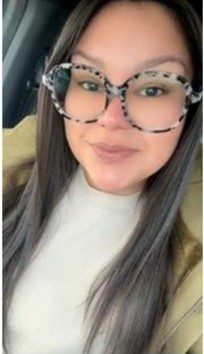
Jasmine Dumas is a devoted mother to a spirited two-year-old boy and proudly represents the O-Pipon-Na-Piwin Cree Nation. She is currently pursuing a Bachelor of Arts at University College of the North in Thompson, with aspirations to transition into the Education Kenanow Program in the near future. Growing up in the North has instilled in her a profound appreciation for the land, which she often seeks as a refuge in nature to destress and reconnect. Jasmine loves sharing these outdoor experiences with her child, embracing the beauty and richness of the Northern landscape. Her insights at this roundtable illustrate the communal essence of food, celebrating the moose that is hunted and shared, the bannock made with love and without instruction, and the garden that gives more than it takes.
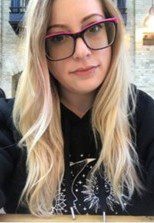
Lynn Smith is a Bachelor of Arts student at University College of the North, majoring in Sociology. AMetis woman with roots in the Red River Settlement, she spent much of her life disconnected from her Indigenous heritage before undertaking a decade-long journey of cultural reclamation. Her contribution to this roundtable is among the most personal in the collection – a story of food as estrangement, and food as the unexpected pathway home.

Emily Bushby is a former student of ANS2900: Indigenous Knowledge and Food Sustainability at University College of the North. She transcribed the November 2025 roundtable discussion with care and attention, preserving the rhythm and texture of the oral exchanges that underpin this essay. Her work made this publication possible.
Faculty Guests

Dr. Asfia Kamal is an Associate Professor in the Aboriginal and Northern Studies Program at University College of the North, where she teaches ANS 2900: Indigenous Knowledge and Food Sustainability and land pedagogy courses. Her work focuses on Indigenous food sovereignty, land pedagogy, and community-engaged scholarship guided by Indigenous research methodologies. She convened and facilitated the roundtable discussion at the heart of this essay and has been the guiding pedagogical force behind the course since its inception.
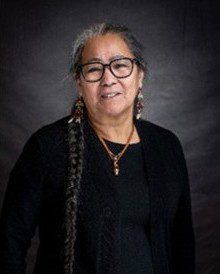
Dr. Jennie Wastesicoot is Chair of the Aboriginal and Northern Studies Program at University College of the North and a member of York Factory First Nation. A fluent Ininew (Cree) speaker, she holds a PhD from the University of Manitoba and brings nearly four decades of experience working with Indigenous communities as an advocate, policy analyst, director, and researcher. Her areas of expertise include Cree law, Cree history, Cree spirituality, and Indigenous self-government.

Dr. Kevin Spice is an Associate Professor in the Aboriginal and Northern Studies Program at University College of the North, where he teaches Aboriginal law, Indigenous law, and restorative justice. His work is grounded in Indigenous approaches to community empowerment, healing, and responsibility. He attended the roundtable as a faculty guest, bringing his knowledge of legal frameworks to the discussion of food regulation and Indigenous food rights.

Kirk Fisher is a Science instructor at University College of the North, where he brings interdisciplinary perspectives to northern and Indigenous learning contexts. He attended the ANS2900 roundtable as a faculty guest and has been a supporter of the course, recommending it directly to students in his own classes. His presence reflects the cross-disciplinary spirit that defines land-based pedagogy at UCN.
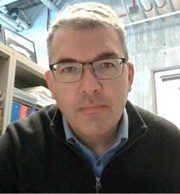
Dr. Greg Stott is a history professor at University College of the North. He attended the roundtable as a faculty guest, and his response to the students’ stories – quiet, moved, and genuine – speaks to the power of the cross-disciplinary listening that land-based pedagogy makes possible.
Editor
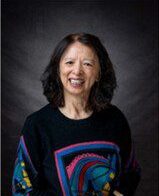
Dr. Ying Kong is an Associate Professor of English at University College of the North, where she teaches Indigenous literature, comparative literature, and courses at the intersection of cultural identity and life writing. She co-founded Muses from the North, UCN’s student joumal, in 2017 to amplify the voices of northern students and create a platform for their creative and scholarly work. As editor of the journal’s Land-Based Teaching and Leaming special edition, she has championed the publication of this polyvocal essay from its earliest stages.
References
Anderson, K. (2000). A recognition of being: Reconstructing Native womanhood. Second Story Press.
Cote, C. (2016). “Indigenizing” food sovereignty: Revitalizing Indigenous food practices and ecological knowledges in Canada and the United States. Humanities, 5(3), Article 57. https://doi.org/10.3390/h5030057
Morrison, D. (2011). Indigenous food sovereignty: A model for social learning. In H. Wittman, A A Desmarais, & N. Wiebe (Eds.), Food sovereignty in Canada: Creating just and sustainable food systems (pp. 97-113). Fernwood Publishing.
Robin, T. (2022). Feeding Indigenous people in Canada. International Social Work, 65(6), 1287 1298. https://doi.org/10. l l 77/0020872820916218