Program Overview
The two-year Natural Resources Management Technology diploma program prepares students for diverse careers in the natural resources sector through a blend of technical training, applied learning, and hands-on field experience. Students gain knowledge in the management and conservation of forests, water, fish, and wildlife while developing practical skills through classroom instruction, labs, and outdoor field activities. Well suited for students who enjoy active outdoor learning, the program builds technical expertise, adaptability, teamwork, and confidence through real-world experiences in a variety of environments and settings.
Learning Environment
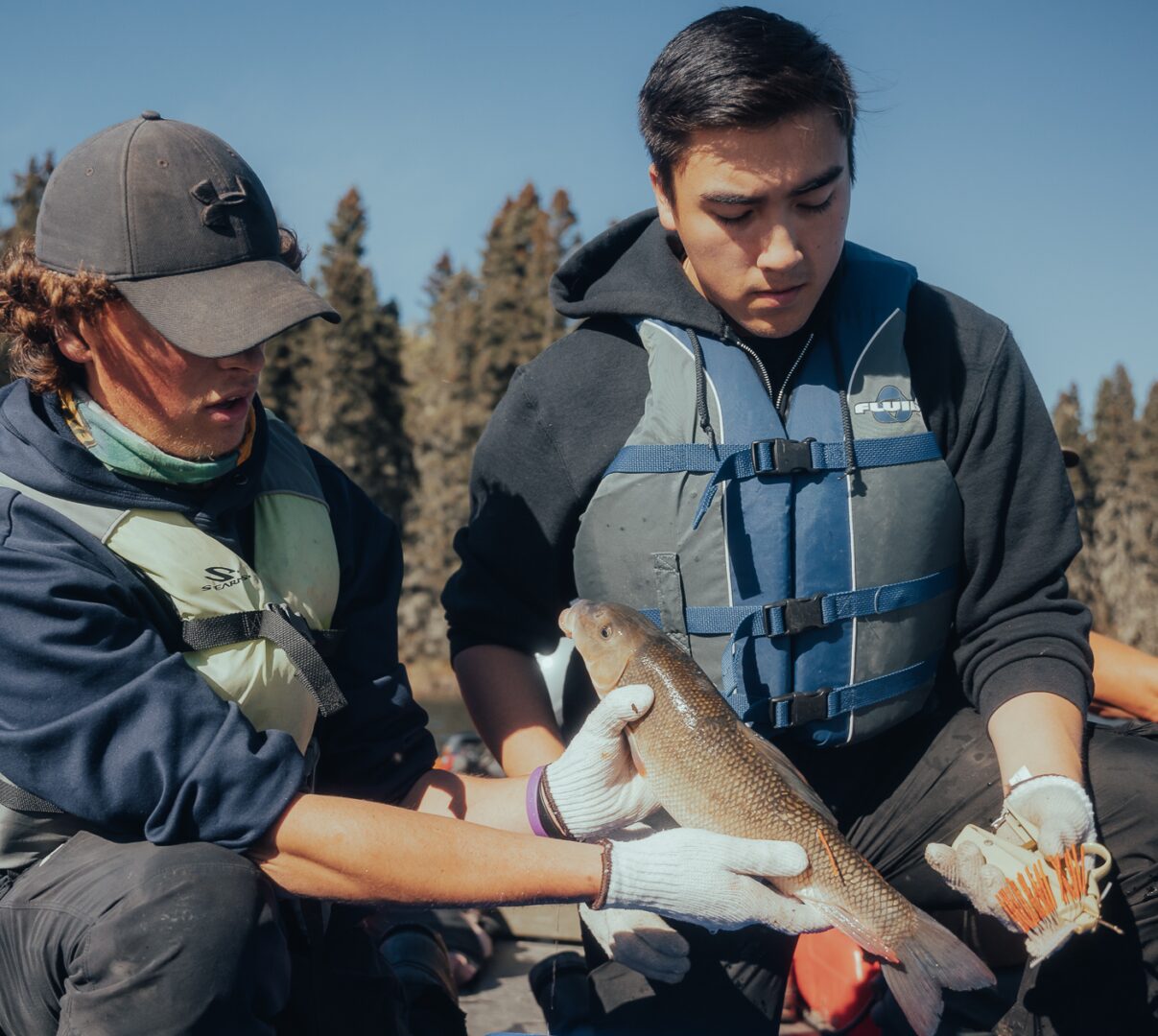
- Students split their time between classroom learning, labs, and field-based activities, gaining practical experience with industry equipment and real-world resource management practices.
- Learning may take place in a variety of environmental conditions and remote settings, helping students build the physical endurance, adaptability, teamwork, and technical skills needed for careers in natural resources.
- Students should be prepared for a demanding and rewarding program that includes a full weekly schedule of classes, labs, and independent study, interspersed with field travel, and physically active work.
- Field trips range from one day to three weeks away from an urban environment. The trip may involve staying in remote camp situations for extended periods. You may learn in various conditions, such as cold, wet, hot, or peak insect seasons. You may travel to remote areas with minimal supervision. (Sound like fun? You should apply.)
- About 60% of the time is spent in the classroom and about 40% in labs and field activities. During field activities, you may work with equipment such as chainsaws, snowmobiles, power tools, and outboard motors.
- Students can expect approximately 30 hours of weekly instruction plus 15-20 hours of independent work, with classes scheduled between 8:00 am – 5:00 pm, possibly including evenings and weekends.
Medical and Physical Expectations
- Good physical fitness, endurance, and coordination for work activities, e.g. walking distances up to 10 km carrying a backpack in various environmental settings, including uneven terrain with many obstacles.
- Strength for heavy lifting – ideal for students to be able to lift materials up to 27kg
- Students may be required to lift materials up to 27 kg. Type 1
- Carry a medium water pump (28.5 kg) on the back and in the hand, lift and carry on the back a hose pack (25 kg), and advance a charged hose (56 kg).
- Good vision for identifying various biological specimens, identifying hazards in the field, and operating various equipment (e.g. boats, chainsaws).
- Adequate hearing for animal identification.
- Note that students may need to use many of these skills at once – e.g. carrying a box of fire hose through the bush requires strength, endurance, coordination, good vision, and good hearing. These are part of the foundation of a solid technician.
At times during the NRMT program, we are in remote locations and may be several kilometres from any form of transportation, in very rough terrain and possibly in extreme weather conditions. Having to assist someone who may become immobile in such conditions poses a risk to the affected individual and to others who may be required to help get this person to a safe location. We realize that such instances can arise with little warning. We need to be made aware of known conditions that could result in increased risk for program participants and staff, so that we can mitigate the risk.
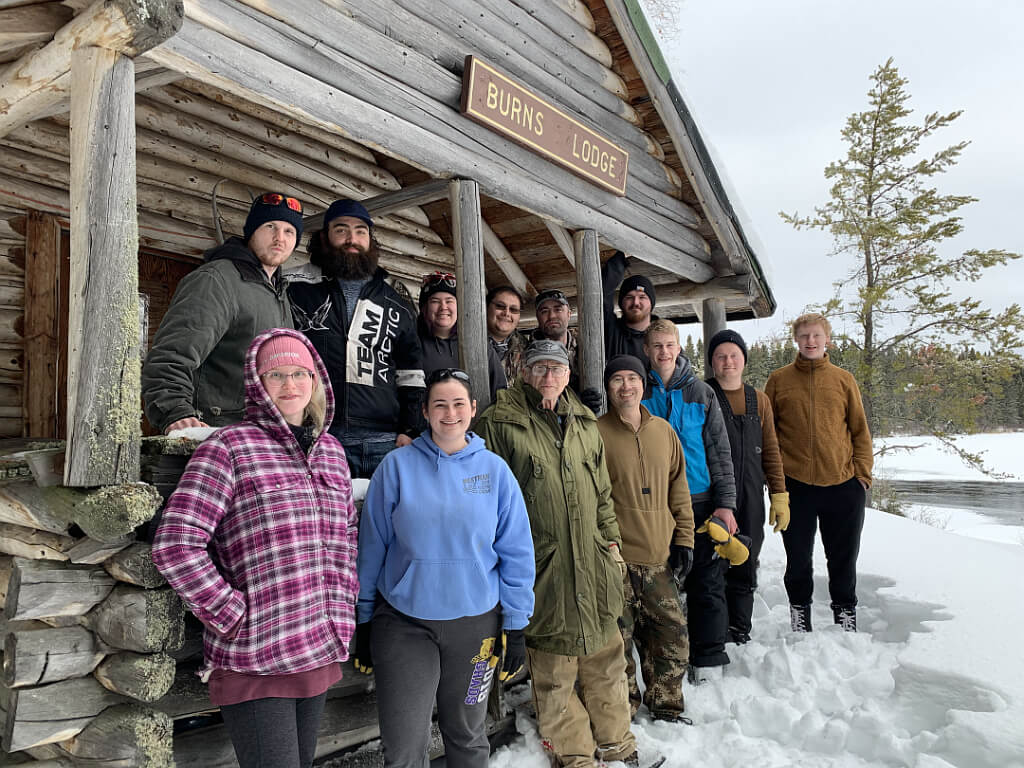
NRMT loves hardcore camping!
The Natural Resources Management Technician Program students get to experience winter and fall camp. The camps take place in semi-remote wilderness settings where students are immersed in the life of fieldwork and camp living. Take a look.
Why Study Natural Resources Management Technology at UCN?
- The NRMT program has been training quality graduates who work in a variety of natural resources fields for over 30 years
- Dedicated staff work closely with students in the field, classroom, and lab to provide a unique educational experience
- Small class sizes ensure that each student gets hands on instruction, and our focus on field skills produces capable and dependable field technicians
- Our fall and winter camps take place in semi-remote wilderness settings where students are immersed in the life of field work and camp living
- Working relationships with government agencies and private industry allow us to expose students to real world experiences that enhance their education
- NRMT graduates can transfer credits to many other post-secondary institutions
Career Outcomes and Community
Careers related to the NRMT program often require workers to lift heavy things and be very active.
- Conservation Officer
- Forestry industry/ Forestry Technician
- Fisheries Technician/Biologist
- Wildlife Technician/Biologist
- Biophysical Resource monitoring
- Private and Public environmental consulting
- GIS Technician
Alumni, Student Spotlights & Related Stories


Program Schedule
| Course | Course Title | Credits |
|---|---|---|
| ABS1001 | Waskawimakanwa Mecimwaci Isihtwawina | 1 |
| ART1390 | Canadian Firearms Course | 1 |
| ART1800 | Technical Writing | 2 |
| EXT0066 | WHMIS (Workplace Hazardous Material Information System) | 0 |
| EXT0158 | Standard First Aid with CPR (St. John Ambulance) | 0 |
| EXT1066 | Animal Care | 0 |
| MGT1710 | Computer Applications 1 | 3 |
| MSC1690 | Biostatistics / General Ecology | 3 |
| RRR1010 | General Ecology | 3 |
| RRR1020.L | Earth Science | 3 |
| RRR1040.L | Water Resources | 3 |
| RRR1050.L | Navigation and Global Positioning System | 3 |
| RRR1060.L | Zoology | 3 |
| RRR1081.L | Natural Resource Law Enforcement | 5 |
| RRR1201.L | Resource Field Safety and Skills | 4 |
| RRR1315 | Wildland Fire Fighter – Crew Member | 0 |
| RRR1320 | Boat Pro Course / Safe Boating | 0 |
| RRR1970.L | Surveying – Leveling | 3 |
| Course | Course Title | Credits |
|---|---|---|
| RRR2000.L | Natural Resources Law Enforcement 2 (optional) | 3 |
| RRR2010 | Geographic Information Systems | 3 |
| RRR2020 | Environmental Assessment | 3 |
| RRR2030 | Air Photo Interpretation / Photogrammetry and Remote Sensing | 3 |
| RRR2050.L | Fisheries Management | 3 |
| RRR2070.L | Forestry Practices | 3 |
| RRR2080.L | Timber and Forest Management | 3 |
| RRR2105.L | Aquatic and Wildlife Ecology | 3 |
| RRR2330 | Fall Field Practicum | 2 |
| RRR2410 | Park Management | 3 |
| RRR2452 | Public Relations and Communications | 3 |
Admissions
Requirements
- High School Graduate
- Minimum English 40S, one credit
- Minimum Grade 10 science or an equivalent accepted by the program
- Minimum Grade 10 mathematics
- Or equivalencies of above.
- Or mature student, see 2.01 of the Academic Calendar.
Important Dates and Deadlines
Program Start Date
September 8, 2026
Program End Date
April 23, 2027
Field Gear & Clothing Guide
As a Natural Resource Management student, you’ll spend a significant portion of your time outdoors in a variety of weather conditions. Whether you’re cruising through a boreal forest in fall, conducting a nocturnal owl survey in spring, or on survival night in -30°C winters, dressing appropriately is crucial for safety, comfort, and learning. This guide outlines what you need, what to look for, and how to stay warm, dry, and prepared.
- Dress in layers: Layering lets you adjust to changing conditions throughout the day.
- Choose durable, functional clothing: Fieldwork can be tough on gear—abrasion resistance, water resistance, and breathability matter.
- Avoid cotton! In cold/wet conditions cotton absorbs moisture and takes a long time to dry. This can lead to hypothermia.
- Emphasize safety: Bright outerwear or vests help with visibility.
- Choose footwear for the outdoors. Hiking boots and safety-toe boots with good tread, support, and waterproofness are recommended.
- A day pack to carry gear and items during outdoor exercises.
- Field pants: Durable, snag-resistant. Reinforced knees or work pants ideal. Avoid cotton/denim jeans.
- Long-sleeve shirts: Sun/insect protection, layering. Lightweight synthetic or wool blends.
- Rain gear (jacket & pants): Keeps you dry during downpours. Look for breathable options.
- Work gloves: Protection from cuts/blisters. Leather palm or synthetic options.
- High-visibility vest: CSA certified vest. Forestry/Cruise vest is recommended.
- Hat (wide-brim or baseball): Sun protection. Insect nets optional for buggy areas.
- Safety glasses: Eye protection is required for many exercises as well as when you are hiking in the forest. Glasses with a full wrap offer better protection against sticks and the unexpected.
Cold-Weather Layering System
- Base Layer: Merino wool or synthetic (polyester). Budget Tip: Long underwear from Costco or Marks.
- Mid Layer: Fleece, wool sweater, or a light puffer jacket. Budget Tip: Thrift-store wool sweaters, down vests (Note that down puffer jackets while extremely warm, they have little insulation value when wet and are often not very durable).
- Outer Layer: Windproof and waterproof jacket or parka. Budget Tip: Look for clearance or used MEC/Columbia/GearTrade.ca. Often many options at thrift stores.
- Insulated Pants: Snow pants or lined work pants. Carhartt, Helly Hansen, or Mark’s T-Max gear.
- Wool or synthetic insulated socks
- Winter Accessories: Toque, neck warmer, insulated gloves/mitts.
· Breathable, light-colored clothing to reduce heat absorption.
· Sun protection: sunglasses, sunscreen, light scarf or neck buff.
· Water-resistant hiking boots or trail shoes.
· Optional: Gaiters, keep your legs dry and the forest out of your boots.
- Wet/Spring: Waterproof hiking boots or rubber boots.
- Hot/Dry: Breathable trail shoes or hiking boots.
- Winter: Insulated boots rated to at least -30°C.
- Thrift/Used Gear: Value Village, Facebook Marketplace, GearTrade.ca.
- Workwear Outlets: Mark’s, Walmart, Canadian Tire.
- Outdoor Gear Co-ops: MEC for student deals and used gear sections.
- Layer Strategically: Smart materials and layers that work together.
There’s no such thing as bad weather, only bad clothing. Invest in good socks, dress in layers, and check the weather every day before class or fieldwork. Being well-prepared lets you focus on learning and keeps you comfortable no matter the season.
Natural Resource Student Clothing Guide Checklist ->