The Echoes of Healing
Blood memories fade yet create blood ties.
No family, no connection!
The blame of today is passed onto tomorrow,
A version of yourself you were never taught to be.
It’s upon me to step into something new,
To unlearn and relearn,
To heal and prosper,
To regain the knowledge we let slip away,
To set boundaries and cut ties,
To see through family lies.
One day,
I’ll share what the world did to me,
Though,
They probably did it to you, too
–Generational Trauma
Waves of Tomorrow
As honest as the birch bark and ripe as wheat.
Both weave together to create my loom.
As the river flows,
So too the person may go.
Remember the rivers of two shores,
I am carried between them, becoming a single current.
I am named twice,
And in each name, I learn to stand
With the flow of time.
Two names, one breath,
I learn to hold both like a sacred cup.
I mend the seams where prairies meet fields of sunflowers,
Where cedar and sage grow alongside grain.
I am named twice
And in each name, I learn to stand
May I walk one day,
With two languages, unafraid,
Two stewards on one earth.
The river runs between my two shores,
And I drink from both waters.
As I now become one of the current
–Mixed Worlds
For my creative process, I chose to focus on two themes: intergenerational connections and dual worlds. The most challenging part of my poem writing has been finding the right words to create a poem. I have always been passionate and hot-tempered, making it difficult for me to articulate my thoughts clearly.
I was drawn to these themes from my simple desire to explore my identity. Being mixed, I wanted to incorporate different perspectives on my family’s heritage. From my poem ‘Echoes of Healing,’ it’s not specifically about me, but instead about the idea of the sacrifices one may make to heal from generational trauma. I find that this concept is a broad, common theme throughout my learning experience.
The line “one day, I’ll open up about what the world has done to me, although they probably did it to you too” has a deeper meaning to me. The meaning is the realization that I think everyone has at one point in their life, where they feel isolated with the guilt of their trauma, as if they are the only one going through bad times, until they have the realization that what they have experienced or gone through, others have also gone through it. It’s almost comforting for an individual to realize that they are not as isolated in their feelings in this world.
Many Indigenous poets across different cultures all write from different histories and geographical locations, yet their words echo similar techniques that are highly recognizable, with purpose, strength, and resilience that use the Western forms to write about the colonization that indigenous peoples have faced. Additionally, themes of land, the animals, and natural cycles often serve as subjects or narrators in their storytelling. It is common for these poets to use wit, irony, and subjective humour to highlight the hypocrisy of colonialism and to make direct calls for resistance.
For my second poem, I have chosen the theme of dual worlds. I decided to go with this theme highlight the often-forgotten history of the Ukrainians and Indigenous peoples of Canada, focusing on their everlasting relationship woven through resilience and mutual support during the times when Ukrainian settlers first came to Canada.
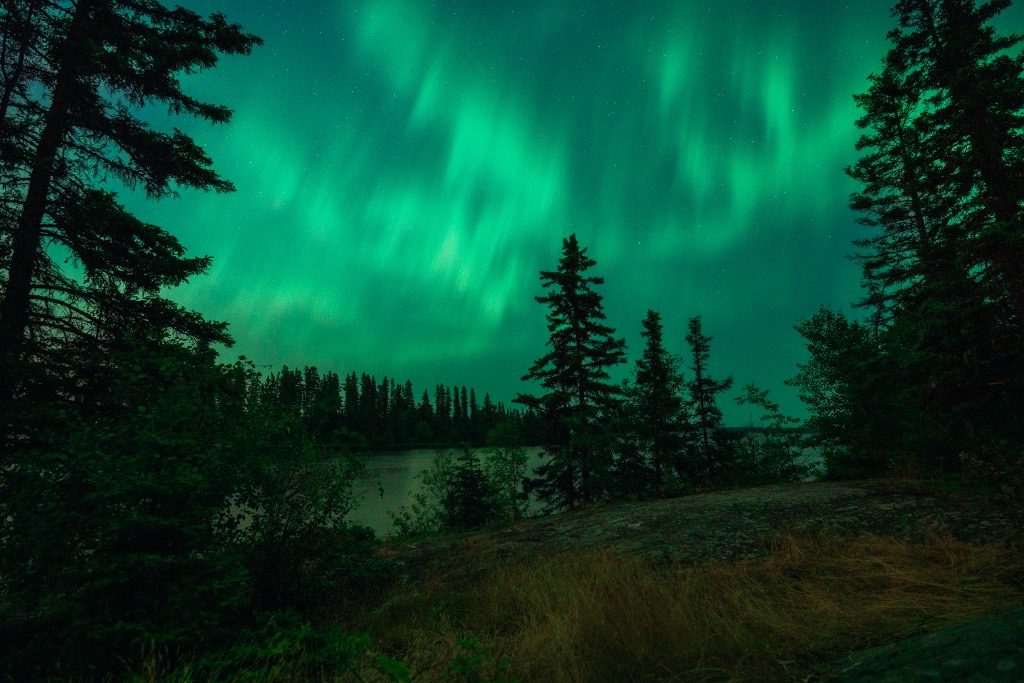
The water is supposed to symbolize blood in a sense, my blood that flows between a land of two worlds that mix as one, just like my kinship connections do. I want to use the river as a representation of my kinship as a mixed Ukrainian and Cree woman. By incorporating land, water, I aim to reflect the concept used in most Indigenous land pedagogy. The boreal forest represents the Cree land. Through my symbolic language, I seek to connect these elements to a river that metaphorically represents the lands claimed by both cultures, carrying their memories and identities downstream. This relationship illustrates my kinship to the river, which does not choose a single home, flows freely, constantly changing and experiencing new things.