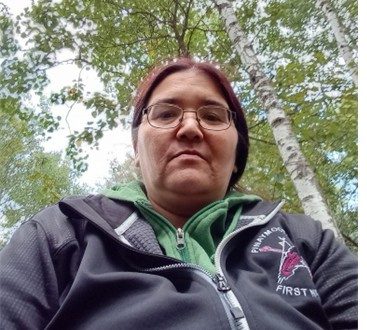
Reading Shigeru Kayano’s Our Land Was a Forest: An Ainu Memoir revealed striking parallels between the Ainu of Japan and the Anishinaabe of North America. Despite an ocean between us, our stories echo with shared experiences of colonial oppression, cultural resilience, and the sacred relationship with land that defines Indigenous identity worldwide.
Both the Ainu and Anishinaabe faced systematic attempts to erase our cultures—the Ainu under Japanese colonization, and North American Indigenous peoples under British and French rule. Today, both communities are reclaiming what was nearly lost: revitalizing languages, preserving ceremonies, and teaching our children through land-based education. We are not just preserving the past but actively rebuilding our connections to the land and to each other.
Kayano’s accounts of the family’s endurance under Japanese colonization are similar to my ancestors’ experiences. The story of forced labour mirrors my own family history. While the Ainu were forced into hard labour in the hands of the Japanese, my grandmother and her sister were forced into Residential Schools, where they had to work hard to avoid the nuns’ abuse. Sadly, my grandmother’s sister, Sophia, never came home because she was beaten to death after attempting to escape. My great-grandmother learnt of her daughter’s death only when my grandmother returned home that summer. Though my grandmother was very tight-lipped about what happened over there, her message was clear: “Get an education and do what you like best.” She wanted all her grandchildren to find the happiness denied to her generation.
The spirit teachings I received from my grandmother resonate deeply with the Ainu practices. She taught us to pray and leave tobacco on the ground when gathering medicine, honouring the plants’ sacrifice. “The forest is a place for thinking,” she would say, warning us not to disturb animals or spirits. I always wondered why she talked about spirits. As an adult, I now realize that the animals and plants are spirits. Kayano describes similar reverence when talking about his grandfather: “He also taught me that when walking in the mountains, we were not to startle the god of the mountains by raising our voices or otherwise creating disturbances” (Kayano 66). The Ainu, too, leave offerings—millets and cigarettes with prayers after taking from the land. As Kayano describes, “There he would lay them out with millet and cigarettes, offering prayers along the lines of ‘Please take these gifts back to the land of the gods’” (Kayano 4). My grandmother warned that without these prayers, the medicine plants would hide from us, making it difficult to find them next time. The teachings stay with me; at a culture camp, I made sure that I had tobacco for offerings and prayers, so I would not offend Mother Nature. Looking at those medicinal plants, I only cut tree branches for an art project, with prayers and offerings.
Community traditions of sharing also unite our people. In the Anishinaabe community, hunters and fishermen honour Elders with gifts of meat and fish—a practice my sixty-nine-year-old mother cherishes. However, she laments its decline as many do not follow it as much as before. “People have become selfish and only think of themselves,” she observes sadly. Actually, Elders are always happy to receive gifts, which makes them feel special and respected. Kayano describes similar generosity among the Ainu: “As the chunks were put into a pot, my brother and I were sent out to invite the neighborhood grandmothers” (19). Despite changes, our community still gathers for feasts several times yearly, maintaining these bonds of reciprocity and care.
Leadership structures, too, reflect shared Indigenous governance traditions. Like the Ainu, we have chiefs who carry the difficult responsibility of serving community interests. Pinaymootang, my community, currently has two chiefs, including the National Chief, whose father once led our community. Having worked briefly as a community support worker, I witnessed both the challenges chiefs face and the lack of appreciation for their efforts. Some people even abuse the benefits system and do not respect the community leaders who manage it efficiently. This experience led me back to education, first as an Educational Assistant, and now as a Kindergarten and Grade One split-class teacher, empowering our youth.
The parallels between Ainu and Anishinaabe experiences reflect a global Indigenous reality. We share connections to the land that transcend geography, stories that sound like poetry in our native tongues, and the struggle to revitalize nearly silenced languages. Though I’m not yet fluent in Anishinaabemowin—my parents, one Anishinaabe and one German, chose English for their children—I am learning. Our school hopes to become a language immersion program, part of worldwide Indigenous language revitalization efforts supported by the United Nations.
Kayano’s memoir illuminates not differences but profound similarities between people on opposite sides of the world. It makes our planet feel smaller, our struggles more connected. Indigenous peoples everywhere seek not to amalgamate into dominant cultures but to preserve our unique worldviews and practices. Each culture holds beautiful elements deserving of recognition and respect. In recognizing our shared stories—from the forests of Japan to the lakes of Manitoba—we strengthen our collective voice for cultural survival and renewal.
Works Cited
Kayano Shigeru, Our Land Was a Forest: An Ainu Memoir, Westview Press, 1980. Colorado.