Editorial Note
“Pemmican Ball (Eh’tseis jol)” is a recipe with a narrative that brings together two forms of knowledge in a single, brief submission: the practical knowledge of how to make a traditional Dene food, and the relational knowledge of why it matters. The inclusion of the Dene language name – both for the dish itself (Eh’tseis jol) and for the caribou (Etthen) – situates this recipe within a living linguistic and cultural tradition, and signals clearly that this food cannot be separated from the people, the land, and the relationships that give it meaning.
As a contribution to this special issue on Land-Based Teaching and Learning, this piece demonstrates that a recipe can be an act of knowledge transmission as significant as any essay. The spiritual reflection that accompanies the instructions reminds us that land-based food practices are not only about nourishing the body but also about reciprocity, respect, and responsibility to the animals and the land that sustain us.
Ingredients & Method
Prepare a couple of large pieces of dry meat Gerky). Hang and smoke them until they are fully dry.
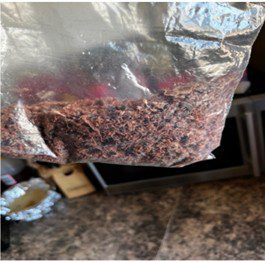
Once dry, pound or blend the dry meat until it becomes powder-like, with small pieces remaining throughout – whichever method you prefer.
Boil caribou fat, then drain it.
Pour the fat into the pounded dry meat and mix well. Sugar can be added at this stage, though it is optional.
Form the mixture into a ball shape -your pemmican ball. Place it in the refrigerator to cool and set.
A Story
The caribou meat feeds our spirit with the love from the Etthen – the Caribou – who gave itself up to us Dene People. It has been part of our foodways for generations and generations. Each time we make this traditional food, we offer our respect to the spirit with an offering, to show our gratitude for feeding our family and friends with their sacrifice