Editorial Note
“Our Random Summer Adventure” presents a unique perspective: the land as a destination chosen freely by young people on an unplanned afternoon. Unlike most submissions that focus on generational knowledge transfer-such as between grandparents and grandchildren-this piece highlights the informal learning that occurs among friends out on the water.
Sasagiu Rapids, Pisew Falls, and Paint Lake are familiar places to the author and her friends in Northern Manitoba. They catch fish, clean and cook them at the quarry’s edge, and enjoy quiet mornings on the dock. None of this is framed as a lesson, yet it embodies the essence of land-based learning, which often reveals itself in simple moments spent with loved ones.
On a random day in July in Northern Manitoba, my friends and I decided to go fishing. We hadn’t planned it – we just felt the need to get out of town and spend some time together. What began as a simple fishing trip turned into an adventure we will always remember.
Our first stop was Sasagiu Rapids, less than an hour’s drive from Thompson. The drive was calm and quiet, with trees lining the road and open stretches ahead. When we arrived, we could hear the rushing water before we even got out of the car. It looked like a great place to fish. We set up our gear near the water and started casting. At first, we waited patiently, but soon the fish began to bite. One by one, we caught pickerel, and each catch brought a burst of excitement. We stayed for several hours, enjoying the moment and helping each other out. By the time we finished, we had caught twelve pickerel. We were tired but very happy.
On the way back, we stopped at the quarry near Pisew Falls for lunch. As soon as we saw it, we were amazed – the water was a bright turquoise, clear as crystal, even with the clouds overhead. The view was breathtaking. We cooked the fresh fish we had caught earlier and shared a meal together. It tasted even better knowing we had caught it ourselves. After eating, we jumped in. The water was extremely cold and took our breath away the moment we hit the surface, but we laughed, swam, and got out quickly, still grinning.

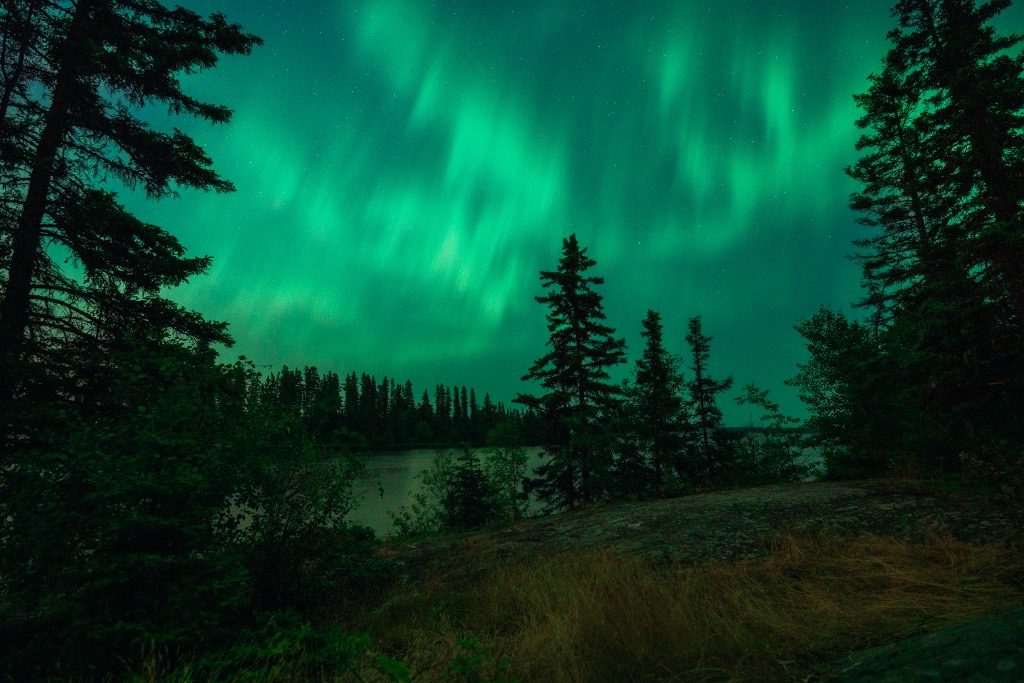
Later that day, we drove to Paint Lake and set up camp for the night. We put up our tents, made a small fire, and relaxed as the sun went down. The lake was calm, and everything felt peaceful. Sitting together, we talked about the day, and the quiet settled over us like a blanket.

The next morning, we woke up early and went fishing again at Paint Lake. The lake was calm and quiet, and the cool morning air felt refreshing. We stood on the dock, casting our lines and enjoying the peaceful view. At one point, my friend Nath had a fish bite on his minnows, and it started to fight back. In the struggle, his phone accidentally slipped from his hands and fell straight into the water. We all froze, watching it sinks slowly, unsure of what to do.
Without hesitation, my friend Junvi jumped into the lake to try to retrieve it. He swam into the cold water while we watched from the dock, worried yet impressed by how quickly he reacted. After a few tense moments, Junvi managed to grab the phone and swim back. We all cheered. Nath’s phone was safe! Everyone laughed, relieved, and amazed at how fast Junvi had acted.