

Editorial Note
“Food, Land, and Family: A Photo Essay” is a visual narrative that honours the land-based knowledge at the heart of this special issue. Rather than explaining that knowledge, the author shows it through images of harvests, gatherings, and meals that together tell the story of a life shaped by the land. In choosing the photo essay format, this contribution reminds us that not all knowledge lives in written language, and that images, like oral traditions, can carry teaching across generations.
The nine photographs move from hunting and harvesting through preservation and preparation to the shared meal – tracing the full arc of land-based food practice. Together they demonstrate what the author expresses directly: that food is not something separate from life, but something connected to family, effort, and place.
These photos come from my everyday life – not something staged or planned. They show how I have learned about food and land through experience, family, and being present on the land.
Growing up, food was not something we just bought from a store. It was something we gathered, hunted, prepared, and respected. Whether it was picking berries, preparing meat, or learning how to handle animals properly, I was taught that food comes from the land and that it requires responsibility.
A lot of this learning did not come from being told what to do, but from watching and doing. Being outside, following along, and helping when I could was how I learned. The land itself teaches patience and awareness – you learn respect from being involved, not from reading about it.
These photographs show some of the most special and memorable moments in my life. Each photo tells a story.
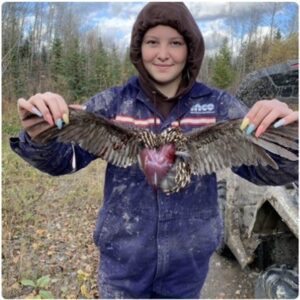
The First Harvest
Learning to hunt means learning responsibility. This bird was harvested during the fall season –
proof that food comes from the land, and that taking it requires knowledge, patience, and respect.
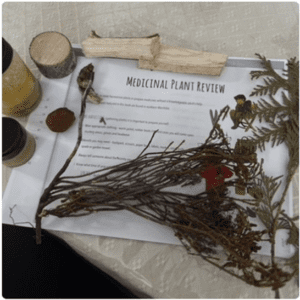
Plants as Knowledge
A medicinal plant review laid out on the table – dried leaves, bark, and stems collected from the land. The land not only feeds us; it heals us. These plants were identified, gathered, and studied in the same way knowledge has always been passed down through doing.
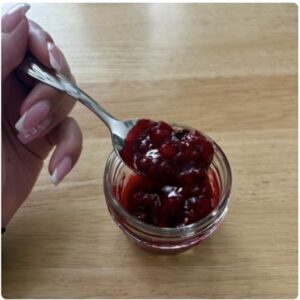
Preserved and Remembered
Ajar of preserved berries, gathered.from the land and put up for winter. Nothing is wasted. The act of preserving is itself a teaching- that the land’s gifts must be treated with care and gratitude.
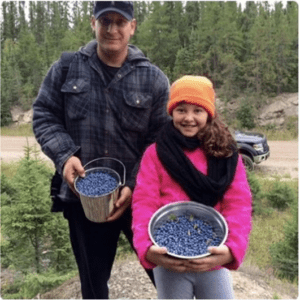
Gathered Together
A successful blueberry harvest with family. The pails full of berries represent more than food – they represent time spent on the land, learning side by side, and the simple joy of bringing something home.
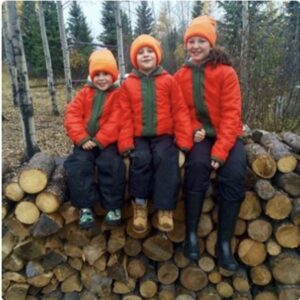
The Next Generation
Children dressed for the outdoors, sitting on a woodpile in the bush. They are already out on the land, already learning. This is how knowledge travels – not just through classrooms, but through seasons and presence.
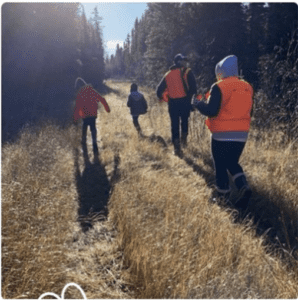
Walking the Land
A group moves through the autumn brush in high-visibility orange. The land itself teaches patience and awareness. You must pay attention to seasons, weather, and timing – and you learn all of this by walking through it.
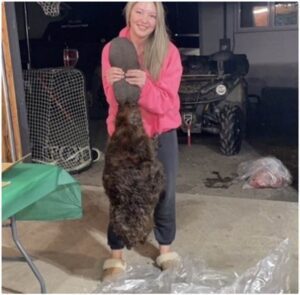
Nothing Goes to Waste
Holding a beaver pelt after a harvest. Every part of an animal is useful; nothing is taken without purpose. This teaching- that food and land require responsibility – is learned through involvement, not through being told.
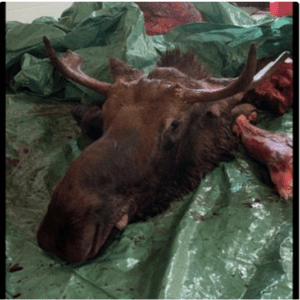
A Moose Harvest
A harvested moose layout, ready to be processed. A moose harvest is a community event – it feeds many families and requires everyone to work together. The land provides, and the community receives.
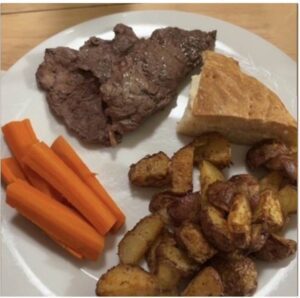
From the Land to the Table
A plate of moose meat with roasted potatoes and carrots made into a meal. This is where all the work leads: to a table, to family, to food that carries memory and meaning in every bite.