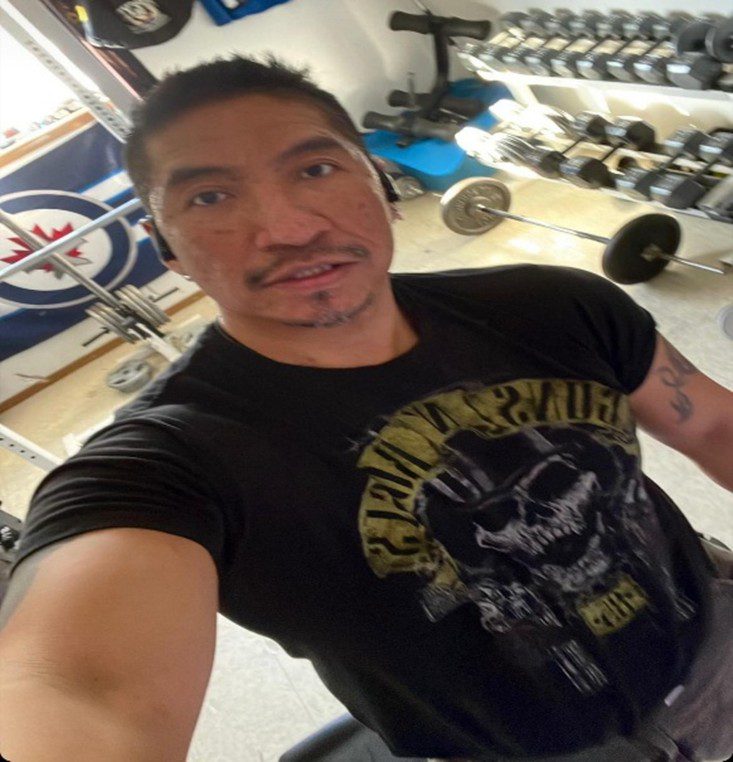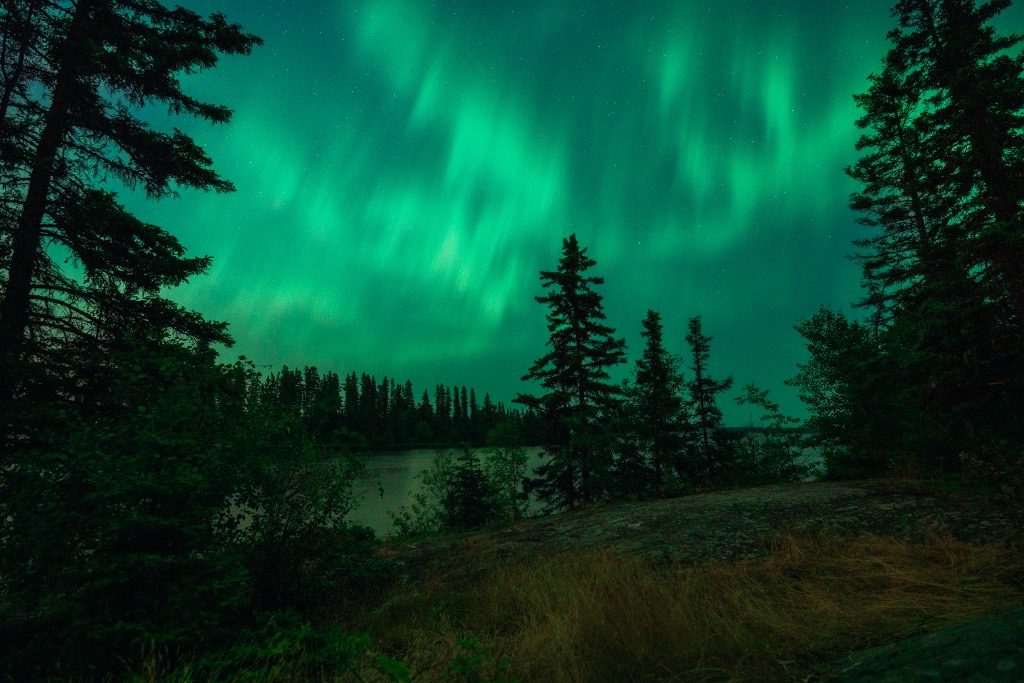
I was born on December 27, 1974, in Thompson, Northern Manitoba, and I have lived my entire life in York Landing First Nation, also known as York Factory Cree Nation. This First Nations community is located over 175 kilometres northeast of Thompson, and there is no highway access to it.
I grew up in a bustling family of 13, a lively household that consisted of my father, mother, eight sisters, and two brothers. Growing up in York Landing provided me with a unique and simple lifestyle, especially during my formative years. Our family was disconnected from the modern distractions of the world; we had no mechanical or electronic devices, no internet, and no video game systems to captivate our attention. This absence of technology gifted us with an appreciation for the great outdoors, which truly became our playground.
Our days were filled with adventure and imagination, as we found joy in the simplicity of nature. We engaged in every childhood game one could think of—everything from the exhilarating sprint of tag and the thrill of hide-and-seek to the classic fun of kicking the can and the energetic exhilaration of Red Rover. Each season brought new opportunities for recreation; we eagerly participated in various sports, including baseball, football, soccer, and hockey. With the limited resources available to us, we became incredibly inventive, creating our own unique games like King of the Hill, where social dynamics and physical agility collided, and Murderball, which ignited our competitive spirits.
Every day, we would gather with a sense of purpose and enthusiasm, meticulously planning our activities as if they were grand escapades waiting just beyond the horizon. Our excitement bubbled over as we discussed the various adventures that lay ahead of us, debating whether today would be suited for skating at the frozen pond, building intricate snow forts, or simply exploring the hidden trails through the woods.
Regardless of the weather—whether the sun painted the sky a brilliant blue, rain danced against the pavement, or soft snowflakes blanketed the ground—our tight-knit group of friends was unwaveringly committed to our morning rituals. Each day at precisely 8:00 AM, we would convene, our hearts racing with anticipation, ready to embrace whatever adventures awaited us.
The camaraderie we shared filled the air with laughter and joy, accompanied by the infectious energy that seemed to radiate from our youthful spirits. Our creativity knew no bounds, leading to spontaneous ideas that transformed ordinary days into extraordinary memories. Together, we weaved a tapestry of experiences that defined our childhood—each moment etched in our minds, making those years truly unforgettable and cherished for a lifetime.
We had a school that served grades K-9, which was considered one of the last of its kind in Manitoba. This school offered a regular curriculum with various subjects. Each year, new teachers arrive in our community to provide instruction. Some of these teachers were able to complete the entire school year, while others quit because they found it challenging to manage a group of energetic kids from the reserve.
This school was different from others today; it had strict rules and harsh consequences for breaking them. Bullying and physical abuse were significant issues during that time and were not taken as seriously as they are now. Nevertheless, we were able to receive an education that allowed us to leave the community for high school, continuing a long-standing tradition.
As the years went by, we grew older and matured. Life on the Reservation was not always fun and games. Each community carried a dark past marked by heavy alcoholism. Many of our friends grew up in homes where parties were a regular occurrence, practically every weekend. During those times, we witnessed a great deal of violence and trauma, which gradually affected us. This cycle of trauma often gets passed down through generations, impacting most of those I grew up with.
During the winter months, parties were common in nearly every house because the bar and beer vendor were located 28 km away in Ilford, Manitoba. Living in a home filled with parties took a toll on us both mentally and physically. We often went to school hungry and tired, but we always managed to make it to class. I believe this is where my struggles with drugs and alcohol began. By around eighth or ninth grade, we were already stealing beer and joints to get high; it was easy to do when people were passed out everywhere.
Our group started drinking and using drugs together. We weren’t typical troublemakers, but we would taunt the local constables, one of whom was my father, just to get them to chase us. We did this for excitement, fueled by the weed we had smoked earlier. At around 12 or 13 years old, getting caught was a serious matter. Back then, a whipping across the backside with a tree branch was seen as a means of teaching respect. I will tell the reader this: those whippings contributed to shaping us into the respectful young men and women we are today.
During my early teen years, I found myself getting heavily into smoking weed and hashish. There wasn’t much for recreation in our community. We mostly went fishing, hunting, and played various sports. As we spent more time smoking, our social circles began to shrink. Many of us started smoking cigarettes because we thought it was cool, which turned out to be a big mistake. We were damaging our lungs and leading inactive lifestyles. As we grew into our teenage years, we focused solely on hanging out, getting high, and drinking alcohol. Unfortunately, we didn’t realize that this lifestyle would set us up for failure.
As we continued down this path, we eventually had to leave our community for grade nine because the school in York Landing did not offer high school. We left behind our homes, families, and the life we knew, moving to Brandon, Manitoba, for our education. Attending school was a life-changing experience; it was a culture shock since we had no idea what to expect. Many of us who left the community for school fell into heavy drinking and drug use because that was what we knew. During this time, we were neglected and felt like we were the only ones who supported us financially. We lived in cramped, one-bedroom homes and relied on each other to get by, often struggling to find enough food to eat. I became so skinny that I looked like a skeleton. All we did was party throughout the week and attend a few sessions at school, each lasting a couple of hours a day. Even the school didn’t track our attendance; we were just the Indigenous kids going to school in Brandon. This routine lasted for six months until my dad came to take me out of school. I still remember the look on his face when he saw me; he looked both sad and angry about how much weight I had lost. I heard about that for a long time.
After that, it was back to the reserve, where I spent the rest of the school year until the following September. For the next five years, I continued this same cycle. I didn’t learn from my experiences and didn’t care to change. My late older brother, Ernest Chapman, was always on my case, pushing me to complete my schooling. He sobered up in the last two years of my education and began to share some wisdom that helped me realize how I was wasting my life.
Then, on January 6, 1998, I lost my brother to a violent death after he relapsed from alcoholism. This was a very tough time for me. I stayed by his side at the hospital until they made the decision to take him off life support. There was nothing more that could be done for him because the damage was irreversible. Following his death, I fell into a dark place, turning to booze and harder drugs because I couldn’t cope with my loss. Burying my brother opened my eyes to how messed up my life had become, and I knew I needed to change.
I made it a priority to finish my high school education and earn my diploma. Although it was challenging, I was able to accomplish this goal. My motivation during this time came from my brother’s encouragement; he was the only one who truly believed in me. I graduated in 1996, and it felt like I had transformed into a new person, filled with a sense of accomplishment.
Later, I met a woman from York, married her, and we had three wonderful children together. Unfortunately, after 11 years, our relationship did not work out. Nevertheless, the greatest blessing from that time was the three beautiful children we raised together.
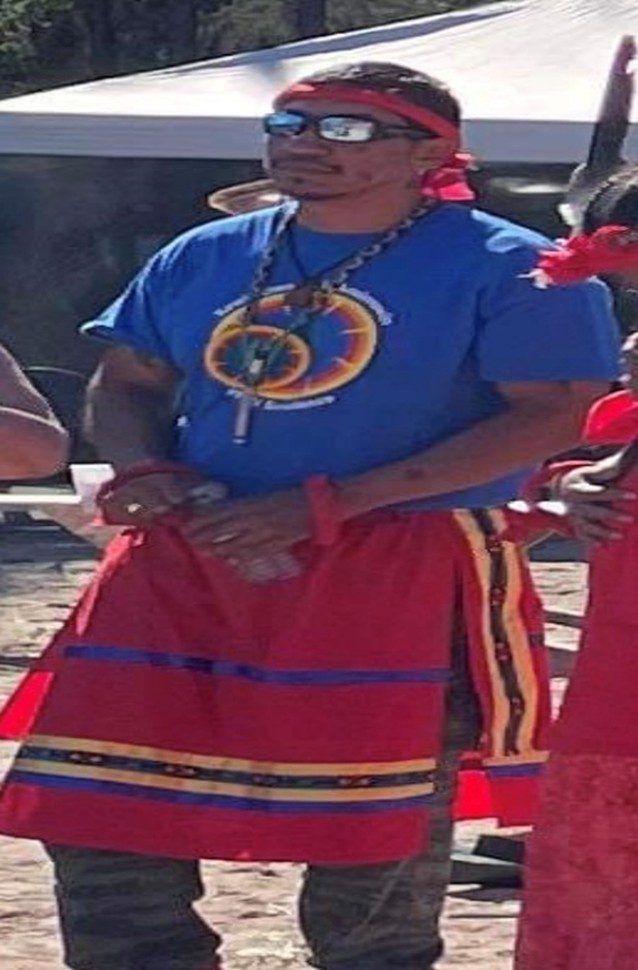
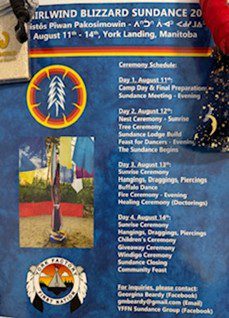
I finally gave up drugs and alcohol in 2017. My family participated in a 7-week treatment program where I was introduced to cultural ceremonies and discovered my self-identity as an Indigenous person. I learned about colonization and the brutal impact it had on our people. This was the key I needed for a healthier life, benefiting me physically, mentally, and spiritually. During this time, I attended numerous ceremonies and took part in the most significant one, the Sundance Ceremony. This experience taught me the importance of forgiving myself for past events. As a result, I was able to live a better life, focus on my sobriety, and prioritize my family.
After graduation, I held various management positions over the years. I spent two years working in finance for the education authority before transitioning to a role as the Education Director. I was well-versed in the intricacies of the education system and excelled in my job. Unfortunately, due to financial difficulties faced by the First Nation, the Education Authority was forced to close. Consequently, I took on positions as a Daycare Director and later as a Hotel Manager. While I wasn’t particularly passionate about these roles, I needed employment to support my family. I worked in both positions for about a year each until a director position with MFNERC at our local school became available. Out of six applicants, I was selected for the role, and I’m currently working in this capacity. I love my job and perform it well. I have successfully established several significant programs, including the Mature Student Program, which has led to community members graduating each year. The most notable achievement has been securing the Keenanow Bachelor of Arts in Education Degree through the University College of the North. This is where I am now.
I am proud to share that I have been sober for seven transformative years, a journey that has given me strength and hope. With no intention of going back to my former life, I have embraced the changes that sobriety has brought me. My heart is full because of the beautiful and adventurous partner by my side, Nadine Saunders. She has not only enriched my life with love and joy but has also blessed me with our incredible baby girl, Alayna Kaylee Chapman, who fills my days with laughter and wonder. Alayna is truly my pride and joy, and every moment with her is a cherished gift.
This is my life in a nutshell—one filled with purpose and gratitude. I have learned to appreciate the life that the Creator has bestowed upon me, and I strive to live it to the fullest. Thank you for allowing me to share a glimpse into my story. Along with this reflection, I would like to share a poem I wrote that captures my struggles with drug addiction and the empowering choice to give it up for a brighter future. It is a testament to resilience and the power of love in overcoming life’s challenges.
Chasing the Devil
In the darkest of daylight, a poison burns like hellfire.
A fearless, silent manipulator, the devil, preys on the sick and the weak.
Offering thoughts of excitement & happiness, a song too bittersweet.
The devil will lure you to the edge of sanity, where the darkness waits to keep you.
The devil’s dust is what you desire; the chase will be relentless.
The instant high, then the moments of peace.
It comes crashing down in a chaotic heap.
Watching as you turn to the undead, battling delusional paranoia conceptions.
The devil takes all from you and leaves you with the feeling of nothing
The burning aches in your heart, as you cry and yearn for your desire.
The intensity swallows you whole as your world starts to decay
With no means of hope, you scratch and claw in search of reality.
The battle inside, feelings of defeat.
Thoughts of death are the final escape.
In the realm of darkness, a war rages as you fight to stay alive.
Searching for good lies a light of hope.
A heartfelt choice of death or life is the only escape from dependency.
To rise above the clutches of evil and shatter the grip of the devil’s prison.