


Participants: Melanie Molin, Elder Theresa Bighetty, Asfia Kamal and Ying Kong
Date: February 17th, 2026
Location: UCN Thompson Campus
Editorial Remarks
This conversation took place as an informal gathering on Treaty 5 territory, bringing together Elder Theresa Bighetty and her daughter Melanie Molin – a knowledge keeper and land-based instructor – with faculty members whose disciplines lie outside Indigenous land-based education. The exchange was not designed as a formal interview; it unfolded as a teaching, with the Elder and land-based instructor speaking from lifetimes of embodied knowledge and the faculty members listening, questioning, and learning.
The version presented here has been edited for the purposes of this special issue. Exchanges that did not bear directly on land-based teaching and learning have been respectfully set aside. What remains is arranged thematically to highlight the pedagogical richness of the conversation: its teachings on how land-based learning is structured, transmitted, and experienced; the role of Cree language, dreams, and ceremony as forms of knowledge; the beaver as pedagogue; and the question of what it means to teach – and learn – from the land.
Opening: Beginning with Prayer
The gathering began with prayer. Elder Theresa Bighetty opened the circle, as she has opened every teaching circle throughout her thirty years of land-based work.
Melanie Molin: In every meeting, in every circle, and every gathering we have a prayer to start. So, our Creator will speak through us.
Elder Theresa Bighetty: When we need something from our parents when we were small, we do this – “please mom, please dad” – so we are going to do that to our Creator, to give us what we need in prayers. I am going to pray in my language.
A prayer was offered in Cree. Elder Theresa then introduced herself and began to speak.
Thirty Years on the Land: Elder Theresa’s Teaching
Elder Theresa Bighetty: My name is Theresa Bighetty. I am 86 years old. I never went to school; I had only gone to school for two years because my parents did not let me go because of what was happening, but they didn’t tell me why. I used to cry and say I wanted to go to school, and my parents would say, “No, you can’t.”
I missed a lot of things about traditional ways, but I learned. My mom used to tell me about the world. When you go outside and look around, you would see that our Creator gave us all kinds of things like medicine, the wind, breathing, and I grew up in the bush on a trap line. I used to sit down and watch what she was doing, ask her what it was, and how she used things. She used to make a rabbit blanket, and I used to look after it. I could do knitting, beadwork, and make a moose hide.
I started working in land-based teaching in 1995; the principal had asked me. At 9:30 a.m., we would start right away; we would go outside and take our students out into the bush. We didn’t have any phones to use; the principal had trust in me to go out trapping with the students.
When we would start, since it was winter, we would shovel out the snow, and I would tell the students to go get some wood to make a fire with dry branches and birch bark. Our grandfathers didn’t use paper to start a fire. To make a big fire, you take spruce trees and put them all around the fire, to make a sitting area like a chair, and a place to put your feet. Before we would start to go trapping, I would tell the students to take off their boots and dry their boots and socks. After the boots were dry, I would tell the students to put their pants over their socks so that snow would not go inside, and remind them not to throw garbage on the ground.
When we start working, we pray. We would stand in a circle around the fireplace, and I would tell my students: “This is the way our spirit looks, like a big fire. When you put lots of wood there, there would be lots of flames; when you work with your spirit, that’s what it would look like.” When we pray, we ask the Creator to help us to be strong, not to fall down. The Creator gave us an angel, so when we fall down, it will help us get back up. We pray every morning.
After we pray, we start walking and making our own trail. We didn’t use snowshoes; we would just walk ourselves. Sometimes the snow would come up to our waist. The young boys would each take turns making the trail for us to follow. I would tell the students about the trees in both Cree and English, how they are named in Cree, and all the dead trees we have lost.
We would talk to them in Cree all the time, so the students would start talking Cree all the time. I worked for the school for 30 years. Sometimes I meet my old students, and I do not recognize
them. They will come and hug me and say how I taught them good things.
“Your mom, your parents, those were your first teachers. They showed you how to crawl, how to walk, how to eat, how to use the bathroom, and how to talk.”
– Elder Theresa Bighetty
Dreams, Medicine, and Ways of Knowing
Dr. Asfia Kamal: Several words that stood out to me were about learning through dreams – learning about medicines, teachings, and sometimes even prophecies through dreams. In your own life, as you were growing up, when did you first begin to learn about the importance of dreams and the teachings that can come through them?
Elder Theresa Bighetty: Those things are medicine. Whenever you want to make medicine and work with medicines, you dream. Our Creator will talk to you and teach you how to use them.
I had my dream at about 30. I used to work with my mother-in-law to go get medicine; she would tell me which ones to take when she was getting older. She told me to take this and bring it to her, and she gave me hugs and tobacco to offer and pray to the Creator to bless the medicine, so the person could be cured when she used that medicine, and the tobacco was to be put on the ground. I started to dream about medicine; the poplar tree is standing and talking to me: “Take me, if you use me, you’ll heal people, it will work.” The first thing in the morning, I made a fire, and I went out to where I had dreamt of the tree. As I was out there, I saw the tree standing, and I said, “Oh, that was you?” I said it in Cree. That’s when I started using the medicine and healing people. I will not just help people, though, unless someone asks for my help.
Melanie Molin: And through dreams, you also know who you are going to become. When I was teaching at the University College of the North, it was like a light bulb went off This was the prophecy I was told I would speak to the next generation. I said: “How I would be teaching and telling about the things that you need to know -your identity, your history, your tradition.” Now and then, you’ll hear me speaking in Cree, but that is my power; to speak my Cree language, and that’s my gift. So, I am going to start passing the gifts I was given. That is my purpose and my responsibility, because each one of us has a purpose on earth and our responsibilities. That is what was prophesied.
The dreams, visions, and prophecies are gifts. And the elder who passed those gifts to me said: “If we don’t fight for children’s well-being and start teaching them the old ways, the next generation will be lost.” The old ways are the land-based teachings. That is what he meant: to go back to the land.
Animals as Teachers: The Beaver and the Seven Teachings
Dr. Asfia Kamal: I have noticed that in many stories and teachings, animals are often used as part of the explanation or lesson. Could you share some background or teachings about why animals are important in these stories and what they help us understand?
Elder Theresa Bighetty: A beaver is always working, like a human person. A beaver is always working – he works for the winter, for a place to stay. He has small hands, and has made a big building, and he took the food for the winter. They make layers in their house: the first layer is where they go from the water, the second layer is where they go to eat, the third layer is where they go to clean themselves, and the fourth layer is where they go to sleep. The beaver only has its teeth to work with, like an axe, and it goes all around the tree like a saw. After they eat, the beavers always clean up and throw the garbage back into the land. The little beavers are the lookout for wolves and bears; if they see someone coming, they signal, and all the beavers will go down and run. Nobody can kill the beaver; he will find a way to get away, because he knows how to protect himself.
Melanie Molin: The beaver teaches wisdom and courage to keep moving forward.
Elder Theresa Bighetty: The beaver is also part of the Seven Teachings; it teaches wisdom. When you do something, do not quit until you finish. That’s why I tell the young people you have to finish grade 12. To learn wisdom, you have to use it. Use the wisdom to do what you want to do, not to get tired; you have to be strong like a beaver. In our home, we are taught to follow the Seven Teachings. If you follow them while you are growing up, you are going to live long. Love, respect, humility, courage, wisdom, truth, honesty.
“The beaver teaches patience. If someone breaks his dam, he is not going to stand there and start swearing. The beaver will look at it, observe it, and fix it before the end of the day.”
– Melanie Molin
Melanie Molin: Those Seven Teachings are lost right now, but they are slowly coming back. The Seven Teachings are in our Cree language. The beaver teaches patience. If someone breaks his dam, he is not going to stand there and start swearing. The beaver will look at it, observe it, and fix it before the end of the day. So, it teaches us not to be very negative but to always think in a positive way. Sometimes we have to remind each other to think positively and not get mad at each other.
I was told to go pray down by the lake before the sun comes up, go and sit and listen to the land, to the birds, and everything around you. One day, I decided to go, took my campers camping, and at five o’clock in the morning, I went and sat down by the rock. The mosquitoes went, I lit my smudge, and I prayed. I sat there by the lake, and I could see the sun peaking. As the young man had mentioned, at the moment of sunrise, it will dance. The birds, the wind, the ripple of water – everything went silent. In that overwhelming silence came the realization that the sun,
the animals, and the water prayed to our Creator too in the morning, to acknowledge him. The Creator works in mysterious ways.
Language, Knowledge, and Curriculum
Dr. Ying Kong: When you teach land-based, do you teach in English or do you teach in Cree?
Melanie Molin: I have to go back and forth. When I was doing the medicine teaching course, I would have gone outside all the time, but there were students in Thompson, so I couldn’t. I had to teach in the classroom. If it weren’t for students in Thompson, I would be outside for each class, because medicine is land-based teaching. I was never taught from a book; it was hands-on, visual instruction. It is hard for me to teach because I am not a book person.
Every Cree word we say is a spirit language; it’s a language from the Creator. When I am teaching, the first thing I do is pray before and after class, in Cree, and I have each student say it in Cree too. Each takes a tum saying the morning prayers of each class, the students pronounce the Cree words very slowly and do not rush. As they do it slowly, they are starting to pronounce each Cree word fluently. I told them that one day you will be fluent in the Cree language.
I always tell my students: the land will speak to you; you just have to listen. The land will show you something; you just have to see it. You have to make a connection, from your belly button to the land, in order to understand the teachings of Mother Earth. The ancestors and our Creator will speak to you right down to your emotions. Once you start having that understanding, it will go to your heart and then come out of your mouth.
If I did not listen when my mom was teaching us – for example, she taught us the word ‘natohta,’ and the meaning of that word is to listen with your right mind. Another teaching I was given was ‘katha kithakisitiy’ – do I have itchy feet? – which means don’t be so itchy to go and teach something that you just heard, because if you do, you will misinterpret what you are just hearing and possibly mislead the next generation. It took me 36 years to be where I am right now; it did not happen overnight.
“The land will speak to you; you just have to listen. The land will show you something; you just have to see it.“
– Melanie Molin
Dr. Ying Kong: So, there is no teaching by the curriculum?
Melanie Molin: The intergenerational educational teaching was given to the ancestors by the Creator, but they didn’t know it was a curriculum. It is just the European way of saying you need to follow a curriculum, but we already had that curriculum, and we have been using it for generations, and it has been passed down. So that is my curriculum – the storytelling and the legends.
Dr. Ying Kong: So, the land teaching can be different from person to person, from location to location?
Melanie Molin: Yes, a different adaptation of what their ancestors had taught them. Sometimes, each nation or tribe connects and learns from one another. There are different medicines in the north and different medicines in the south. So, you have to connect with people from the south to pick up these medicines, and that is their adaptation.
“We already had that curriculum, and we have been using it for generations, and it has been passed down. So that is my curriculum – the storytelling and the legends.”
– Melanie Molin
The Classroom and the Land
Dr. Ying Kong: You had mentioned how classroom teaching for land-based is never as good as being outside on the land, so how can you make a remedy for your classroom teaching?
Melanie Molin: For myself, since I have started teaching, if there is an opportunity within The Pas during class time, I will tell my students that they have the opportunity to go and learn, and I will give them that choice to attend – but they have to write me a half-page report of what they learned. Even when there are pipe ceremonies at the student centre, I will ask my students who want to go and learn; they just have to write a short report on what they learned. Most of the students will go, but not all. So, that is a sense of land-based learning where they are going to learn something traditionally.
One time, there was an Elders’ conference happening in The Pas, and all of my students wanted to attend. When we showed up, they said there was no room, but did I give up? No. So I made my students go sit in the corner and listen. The Elders were speaking Cree, telling stories of their dreams and visions, and the students could hear it all – so it was like an awakening for them.
For my first couple of classes, I would take them outside to make a connection with Mother Earth. I was the first to ever do that. I got all my students to go outside, take their shoes and socks off, and stand with the land in a circle. I told my students that the first thing we would do was pray. I had my drum and did a small drum song for them. I told them to listen and feel the energy come from Mother Earth as I am singing – that is our ancestors and the Creator coming through you, giving you that energy. I told them to feel the energy coming through their toes, up their ankles, up their legs, just feel its energy, and reenergize themselves.
I looked around, and some students were crying. They said how good it felt to have that connection with Mother Earth through a ceremony. So, I told them that is what they have to do when they are feeling down, when they are feeling stressed: go outside and take your socks off and your shoes and just feel the earth. Or go hug a tree, talk to it – even though it won’t answer you back, don’t be surprised if you hear a whisper. Listen to it.
I usually get my mom to come, and we go for walks on the land. I tell the students to look at the trees – the trees are waving at you. The ancestors are happy you have come to the land to greet them. You know how long they have been waiting for you to come and greet them? The sun was shining; the leaves were falling. That is your greeting from your ancestors. They are happy you have come to the land, that you are finally here.
The students in Thompson wished they could have been there instead of Zoom. I don’t like Zoom, but I know it is the new way of teaching. If I didn’t have to teach on Zoom, I would be taking my students outside constantly, because that is where the teaching is, that’s where you need to hear the ancestors speak. You learn more than you do in the classroom, but that is the new way of learning – also through books.
“I was never taught from a book; it was hands-on, visual instruction.”
– Melanie Molin
Taking Only What Is Needed: Stewardship and the Land
Dr. Ying Kong: I know that a worry is how the land was badly treated, so what will bring the future?
Melanie Molin: Right now, when I am teaching the students within my classroom, I am in an environmental course, and I said how we have to take care of our environment first with our body, because our seed was planted within our minds; our heart is where the water comes, and we have to water that garden from our heart for it to flourish. The environment is our body, and we need to take care of our body first. In order to understand Mother Earth, you need to heal yourself, and you need to understand yourself first.
A long time ago, we were told to take only what is needed. Today, the trees are cut – it is not what people need. They cut all the trees. They built the dam to close the water flow. The beaver showed us his engineering skills; he was an architect. People learned from the beaver; they went and put dams for electricity. They didn’t take only what was needed; they displaced and brought disruption to the land. A long time ago, there were fishermen and trappers who had their own trap lines. When they knew it was almost trapped out, they would leave the trap line alone and move to a different one, so the animals and plants could regenerate. They used to do seasonal moves so the land would recover – that is a teaching that has to come back.
Dr. Ying Kong: With the trapping- when you do hunting, you can tell which is the mother, and you don Y kill it, but with trapping, can you tell?
Elder Theresa Bighetty: No, in June they start trapping. In the middle of May, the bears and beavers start having their babies – there is no trapping then because of the little ones. There is always a time of season when to hunt, when to trap, and when to harvest. So, they follow the seasons when they have to do these things.
The Echoes Are Coming Back
Melanie Molin: Right now, the next generation is going to come back and learn their own adaptations in their reserves, and they are going to return to the land. I always tell my students: the land will speak to you; you just have to listen. Our ancestors and our Creator will speak to you right down to your emotions. Once you start having that understanding, it will go to your heart and then come out of your mouth.
When I am outside, I can hear the ancestors through the birds, the wind, everything coming through the land. Those teachings are coming back. This generation I am teaching is craving their Cree language – they are learning it; the next generation will learn more. Everything is going to come back. Those echoes are coming. The grandfathers and grandmothers and our ancestors – the echoes are coming.
Just like the circle, or the medicine wheel, everything comes back into a complete circle. The next generation is going to find who they are.
Elder Theresa Bighetty: So, those things are coming back, but in a different way. It’s not going to be the same. But the echoes are coming. A long time ago, you could hear the children running around, telling stories – the echoes of their laughter. So those echoes are coming back.
The gathering closed with an offering of tobacco and a prayer of gratitude for the knowledge shared. Dr. Ying Kong offered closing words of thanks, and Dr. Asfia Kamal offered tobaccos to Elder Theresa Bighetty and Melanie Molin on behalf of the faculty present.
About the Participants
Elder Theressa Bighetty, an Elder from Pukatawagan, is a proud Cree speaker and dedicated land-based practitioner. Her life has been devoted to learning from the land and her Elders, focusing on medicines, stories, food, and various land-based skills. As an Elder with UCN, she shares her knowledge with students, particularly about medicines, and continues to visit classrooms to teach. Theressa actively participates in land-based learning, language, and healing camps alongside her daughter, Melanie Molin, who is also a land-based medicine practitioner and Cree storyteller.
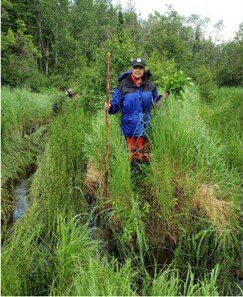
Melanie Molin holds a Bachelor of Arts degree from the University of Brandon and currently serves as an instructor in the Aboriginal and Northern Studies Program at the University College of the North. Her spirit name is Pimithaw Mikisiw-Achak Iskwew, which translates to “Flying Eagle Spirit Women.” Melanie is not only a daughter, mother, and grandmother but also a strong advocate for incorporating land pedagogy into both everyday life and the classroom.
Born and raised in Pukatawagan, Melanie now resides in Opaskwayak Cree Nation. She is deeply committed to learning from the land and embracing the wisdom of land-based medicines. This commitment stems from the teachings passed down to her by her mother, Elder Theressa Bighetty, and other elders within her family and community. Melanie actively incorporates these teachings into her life and work, emphasizing the importance of connecting with the land in meaningful ways.
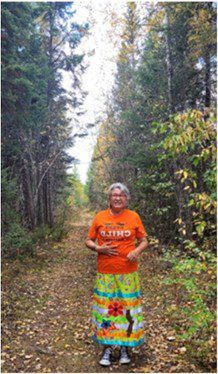
Dr. Asfia Kamal is a faculty member at the University College of the North, conducting community-based research in Treaty 5 territory with a focus on Indigenous food sovereignty, land-based pedagogy, and Indigenous knowledges. She is the guest editor of the special issue, “Land-Based Teaching and Leaming.”
Dr. Ying Kong is a faculty member of the English department and co-founder and co-editor of Muses from the North.