
Editorial Note
This PhotoVoice essay was submitted by Emily Bushby as part of ANS 2100: Research Methods in the Aboriginal and Northern Studies program at the University College of the North, and brought to this special issue by the land-based instructor of ANS 2900. Emily is also a contributor to the Poetry section of this issue, where her poem “Like Father, Like Daughter” appears, and she served as a transcriber on the Conversational Interview with Omar Constant and A Conversation with Elder Theresa Bighetty and UCN Instructor Melanie Molin. Her presence across multiple sections of this collection reflects the depth of her engagement with the course, the community, and the land.
Moreover, she also serves as a research assistant for the UCN Seed Grant-Sponsored project, “Returning to the Land: Indigenous Knowledge Systems and Educational Transformation.”
Introduction
In recent years, land-based education has emerged as an increasingly valued approach to teaching, particularly within Indigenous communities and outdoor learning programs. Land-based education involves learning directly from the natural world by engaging with the land through activities such as harvesting plants, building shelters, identifying ecological systems, or participating in cultural practices rooted in place and values. This form of educational practice encourages students to build relationships with the environment, with their community, and with their own learning process.
Research in cognitive psychology has emphasized the critical importance of hands-on learning. Learning with one’s hands activates motor, sensory, and cognitive networks that deepen memory, enhance problem-solving skills, and support stronger conceptual and physical understanding. The growing body of research on land-based and hands-on learning suggests that these two approaches connect in powerful ways.
As schools face rising reports of anxiety, depression, and disconnection among students, educators and researchers have begun to explore how nature-based and experiential approaches could provide meaningful alternatives to traditional classroom settings. PhotoVoice, a research method centred on visual storytelling, provides a unique lens through which to examine this connection. By documenting experiences through photographs and narratives, learners can communicate how interacting with the land, using their hands, and engaging in outdoor activities shapes their mental and emotional well-being.
Understanding the significance of land-based education requires acknowledging the broader cultural, social, and historical contexts in which learning occurs. For many Indigenous communities, land-based learning is not an “alternative” approach; it is the foundation of knowledge transmission, cultural survival, and community identity. When students engage with the land through teachings, ceremonies, gathering plants, or learning traditional skills, they participate in an intergenerational process that strengthens relationships to culture, community, and place. This relational dimension has been shown to improve mental health by reinforcing belonging, cultural continuity, and identity – factors that are protective against depression and psychological distress.
Beyond Indigenous contexts, land-based learning addresses a widespread challenge: young people today spend less time outdoors than at any point in human history. Increased screen time, modernization, and sedentary lifestyles have contributed to rising mental health concerns. Research consistently demonstrates that exposure to nature decreases cortisol levels, improves mood, increases attention span, and enhances emotional regulation. When students learn outside – whether gardening, navigating landscapes, building structures, or observing wildlife – they benefit cognitively and emotionally. These experiences counteract the isolation often associated with contemporary schooling and create meaningful, lasting memories.
Research Approach: PhotoVoice
This research project employed PhotoVoice as its central methodological approach to explore the connections between land-based education, mental well-being, and hands-on learning. PhotoVoice is grounded in visual storytelling, narrative sharing, and community-centred knowledge production (Wang & Burris, 1997). The methodology enables participants to visually document their learning experiences and reflect on how those experiences influence the topic of research. Through photographs and accompanying narratives, participants can express their perspectives in ways that traditional written methods may not fully capture. PhotoVoice is particularly valuable in Indigenous research contexts because it supports storytelling traditions and emphasizes relational knowledge.
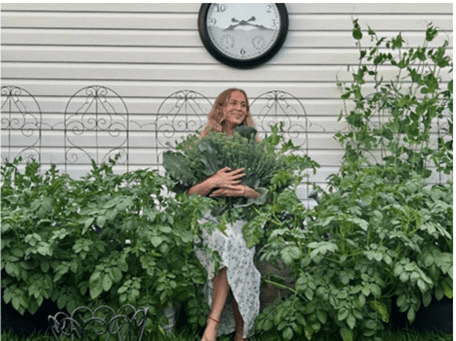
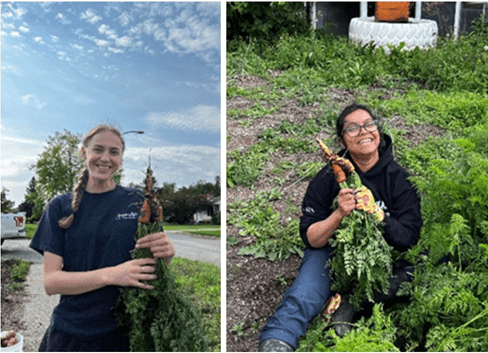
For this research project, photographs representing land-based learning, community interactions, and outdoor activities were used to illustrate the connection between learning environments and emotional well-being. This mixed-media approach created a deeper understanding of how land-based learning and hands-on experiences influence mental health and cognitive development. PhotoVoice also allowed for reflection on how different people interpret the same landscape or activity – not only documenting experiences but encouraging dialogue and shared understanding within communities.
What This Research Explores
This research examines how land-based education and hands-on learning contribute to mental health, emotional well-being, and cognitive development – and it does so by bringing together five interconnected arguments.
First, land-based education reduces stress and improves emotional well-being. Second, nature-based learning strengthens identity and belonging by connecting students to culture, community, and environment. Third, hands-on learning engages cognitive function more deeply than traditional classroom instruction. Fourth, hands-on activities promote mindfulness and emotional regulation through physical engagement and sustained attention. Fifth, the combination of land-based and hands-on learning creates a holistic educational experience that supports whole-person development. Together, these arguments point toward a model of education that is not remedial or supplementary but transformative.
What the Research Shows
Numerous peer-reviewed studies support the claim that land-based and nature-based education improve mental health outcomes. Greenwood and de Leeuw (2012) argue that land is a central teacher in Indigenous epistemologies, and learning through land enhances emotional well-being by fostering relationships rooted in identity and cultural continuity. This understanding also resonates with Kimmerer’s (2013) emphasis on relational ways of knowing, in which humans are part of the natural world rather than separate from it. Similarly, Ritchie (2013) found that outdoor learning in early education leads to increased emotional regulation and decreased anxiety among students.
Research on nature exposure consistently shows reductions in stress levels. Bratman et al. (2015) demonstrated that walking in natural environments reduces rumination while improving overall emotional well-being. Kaplan’s Attention Restoration Theory (1997) further explains this phenomenon by suggesting that natural environments restore depleted cognitive resources that are often strained in urban or indoor settings.
Hands-on learning has also received substantial academic attention. Pellegrino and Hilton (2012) emphasize that experiential learning promotes deeper conceptual understanding compared to passive forms of instruction. Cognitive neuroscience research by Kontra et al. (2015) further supports this claim, demonstrating that physically engaging with learning materials activates sensorimotor brain systems associated with memory formation and problem-solving.
Many studies highlight the intersection of hands-on learning and emotional health. Chawla (2015) found that nature-based hands-on programs – including gardening and building activities – reduce stress while improving self-efficacy and emotional resilience. The tactile elements of hands-on learning – touching soil, shaping materials, constructing objects – combine with the calming effects of natural environments to create optimal conditions for learning. These experiences encourage mindfulness and sustained attention, both of which contribute to emotional stability and cognitive growth.
Through the PhotoVoice process, it became clear that land-based learning is not only an educational strategy but also an emotional and relational experience. The photographs captured moments of connection between learners, the land, and community members – moments reflecting the deeper purpose of land-based education: strengthening relationships with place, culture, and identity. PhotoVoice also revealed how individuals interpret land-based experiences differently. Some focused on the calming effect of natural landscapes; others emphasized the importance of learning from Elders or working with their hands. These different interpretations highlight the multidimensional nature of land-based education and its capacity to support diverse forms of learning and well-being.
Conclusion
This research demonstrates that land-based education offers substantial mental health benefits, including stress reduction, emotional regulation, and strengthened identity. Learning with one’s hands enhances cognitive functions such as memory, focus, and problem-solving. Together, these approaches create a holistic educational model that supports emotional, cultural, and intellectual growth.
In an era when many students face mental health challenges and feelings of disconnection, land-based and experiential learning provide a powerful alternative rooted in relationality, embodiment, and well-being. PhotoVoice has shown this not only in theory but also through lived experience. By documenting moments of learning, connection, and reflection, the method illuminates the transformative potential of learning from the land and through the body.
This essay connects themes such as intergenerational knowledge transfer, hands-on learning, connection to community, the essential role of Elders, and learning through laughter. Together, these elements demonstrate how land-based learning positively supports cognitive function and improves mental and physical well-being.
About the Author
Emily Bushby currently studies Aboriginal and Northern Studies at the University College of the North, aiming to become an elementary school teacher. In this special issue, she also submits a poem, “Like Father Like Daughter.”
References
Bratman, G. N., Hamilton, J.P., Hahn, K. S., Daily, G. C., & Gross, J. J. (2015). Nature experience reduces rumination and subgenual prefrontal cortex activation. Proceedings of the National Academy of Sciences, 112(28), 8567-8572.
Chawla, L. (2015). Benefits of nature contact for children. Journal of Planning Literature, 30(4), 433 452.
Greenwood, M., & de Leeuw, S. (2012). Reconciliation and Indigenous health. The Lancet, 383(9910), 1-9.
Kaplan, S. (1997). The restorative benefits of nature. Environment and Behavior, 29(1), 1-17.
Kimmerer, R. W. (2013). Braiding sweetgrass: Indigenous wisdom, scientific knowledge, and the teachings of plants. Milkweed Editions.
Kontra, C., Lyons, D. J., Fischer, S. M., & Beilock, S. L. (2015). Physical experience enhances science learning. Psychological Science, 26(6), 737-749.
Pellegrino, J. W., & Hilton, M. L. (Eds.). (2012). Education for life and work: Developing transferable knowledge and skills in the 21st century. National Academies Press.
Ritchie, S. D. (2013). Community-based experiential learning improves mental health. Journal of Experiential Education, 36(3), 230-247.
Wang, C., & Burris, M. A (1997). PhotoVoice: Concept, methodology, and use for participatory research. Health Education & Behavior, 24(3), 369-387.
Editor's Remarks
In this paper, Bushby uses a Photovoice-inspired approach to reflect on how learning experiences connected to the land can shape emotional well-being, cognitive development, and personal identity. Her reflections highlight how land-based learning environments-such as gardening, harvesting, and working alongside community members-create spaces where students can reconnect with nature, culture, and community. By combining visual storytelling with personal reflection and academic research, the paper demonstrates how experiential learning can be examined through both scholarly literature and lived experience.
The significance of this work lies in its ability to bridge academic research and personal insight. While many studies emphasize the psychological benefits of nature exposure and experiential education, this paper illustrates how these ideas come alive within real learning environments. Bushby’s discussion also reflects broader conversations within Indigenous education that recognize the land as a teacher and emphasize the importance of intergenerational knowledge transfer, community relationships, and embodied learning.
At a time when many educational systems are grappling with rising student anxiety, disconnection, and burnout, this paper contributes to an important dialogue about alternative approaches to education. Land-based and hands-on pedagogies offer meaningful pathways toward learning environments that support holistic well-being, cultural connection, and intellectual growth. (Dr. Asfia Kamal)